


Key takeaways
- Addison’s disease is a condition caused by issues with a dog’s adrenal glands.
- It’s an inherited condition that unfortunately can’t be cured, though it can be managed with vet intervention and prescribed medication.
- You can help support your pooch’s overall health & wellness with a a healthy, complete diet that champions easily digestible ingredients.
Has your dog seemed off-colour for a while and your vet can’t get to the bottom of it? Perhaps they have spells of being unwell, only to bounce back to themselves within a day or two. It’s easy to put these signs to fleeting, digestive upset, but they could point towards something called Addison’s disease.
This condition is the result of hormonal imbalances and can easily missed and misdiagnosed as other illnesses because of its range of symptoms. Once properly diagnosed and with the right treatment, dogs can live full, happy lives.
So if you have a feeling that something’s not quite right with your dog, you might want to start a conversation about Addison’s disease with your vet. Here’s all you need to know before you do.
What is Addison's disease?
Addison’s disease is when their adrenal glands stop working properly.
This is commonly due to an autoimmune issue but can be due to trauma or a tumour. Otherwise known as hypoadrenocorticism, this condition causes a hormonal imbalance. By stopping the adrenal glands from functioning properly, it can lower or stop the production of cortisol and aldosterone, which are two steroid hormones. These hormones are important in many functions of the body, including managing insulin levels, getting the right balance of minerals and managing stress.
So if they’re thrown out of balance, it can start to affect your dog’s organs and muscles. Left untreated, the disease can start to cause other problems for your pooch, such as UTIs and blood clots.
Addison’s disease is, broadly-speaking, the opposite of Cushing’s disease.
What are adrenal glands?
A dog’s adrenal glands are in front of their kidneys, which are located in the middle of their back. They’re made up of two parts: an outer cortex, which produces steroid hormones, and an inner medulla, which releases stress hormones.
The part of the adrenal gland that’s affected or damaged determines which hormone levels are influenced. For example, if the outer cortex is impacted, then levels of cortisol are likely to change. This will affect the exact symptoms of Addison’s disease that a dog will get.

Types of Addison’s disease
There are two main types of Addison’s disease: primary and secondary.
Primary Addison’s disease is when there's a problem with the adrenal gland itself. This can be a range of issues, such as damage due to trauma, the presence of a tumour or an autoimmune disease which attacks it.
Secondary Addison’s disease is caused by a problem with the pituitary gland. This gland stimulates the adrenal ones to produce hormones, so if there’s a problem with the pituitary’s function, then it can lead to Addison’s disease.
Signs of Addison’s disease in dogs
The symptoms of Addison’s disease in dogs can be similar to those of other conditions. It’s often called ‘the great pretender’.
These symptoms can also come and go or vary in severity. Although there is no one set of symptoms that a dog can suffer from, it can include:
Being low energy or lethargic
Not eating or a reduced appetite
Vomiting
Diarrhoea
Weight loss
Drinking and weeing more than usual
Weakness and shaking
Unbalanced electrolytes
General signs of illness such as a dull coat and pale gums
What is an Addisonian crisis?
On occasion, the symptoms of Addison’s disease can appear all at one in an attack known as an Addisonian crisis.
This is a severe form of the illness and can be life-threatening. This can show as severe vomiting, diarrhoea, shaking, weakness and an eventual collapse.
If your dog’s symptoms deteriorate quickly, you should get immediate attention from a vet.
What causes Addison’s disease?
The exact cause of Addison’s disease can vary significantly. Primary Addison’s disease is usually the result of one of the following:
An autoimmune issue that means your dog’s immune system attacks and damages the cells of their adrenal glands.
Cancer or benign tumours growing in the kidney or location close to the adrenal gland.
An injury or infection in the area near the adrenal gland.
In contrast, secondary Addison’s disease is the result of a defect or damage in the pituitary gland that stops it sending signals to the adrenal glands.
In some cases, the long-term use of steroids can bring on Addison’s disease.
This is because the adrenal glands start to shrink, meaning they don’t function as well as they should. This can be stopped by gradually weaning your dog off this medication, under veterinary supervision.
Can you prevent Addison’s disease in dogs?
Addison disease in dogs can’t always be prevented as it’s often inherited or immunity related.
Some breeds are genetically predisposed to getting the condition. Others might develop it because of steroid treatment they’ve had. Often, the triggers are completely unknown.
What breeds are more prone to Addison’s disease?
The following breeds of dog are more prone to getting Addison’s disease:
Portuguese water dogs
West Highland White Terriers
Bearded Collies
Nova Scotia Duck Tolling Retrievers
Leonbergers
Great Danes
Soft-coated Wheaten Terriers
German Shorthaired Pointers
If a dog is diagnosed with the condition, then they shouldn’t be used for breeding, as it’s possible they’ll pass it on to their puppies.

Diagnosis
To diagnose Addison’s disease, your vet will talk through your pet’s medical history and ask about any symptoms they’ve experienced.
They’ll then run tests on their blood and urine. Sometimes, they might do an ECG and imaging such as an abdominal ultrasound. These will help your vet rule out any other conditions or problems.
If they suspect that Addison’s might be the problem, the vet will run an ACTH stimulation test. This involves taking a baseline cortisol measurement before injecting your dog with a synthetic ACTH hormone.
They’ll then test your dog’s blood again after an hour to see if your dog’s cortisol levels have risen. If they’re still low, it suggests that their adrenal glands aren’t working correctly.
Treatment
Sadly, Addison’s disease can’t be cured, but it can be managed long term with the right medication and care.
Depending on the type and levels of the hormone affected, the exact medication they need will change. It may be a monthly injection administered by a vet, and/or tablets you give your dog everyday at home. It’s important that you keep up with their regime, otherwise symptoms could return.
If your dog has an Addisonian crisis, then they’ll need emergency treatment which may include IV fluids and a stay at the vets. They’ll monitor your pooch closely until they’re well enough to be fully diagnosed and get the right treatment.
Aftercare
After a crisis or at the beginning of treatment, your dog is likely to have regular check-ups at the vet. That way, they can closely monitor your pooch’s condition and make sure they’re getting the right type and level of medication.
Otherwise, you should focus on supporting your dog’s overall health and wellbeing with regular exercise and a healthy, balanced diet.
Plus, making sure any other medical conditions are treated properly will help them stay well.
What’s the best diet for dogs with Addison’s disease?
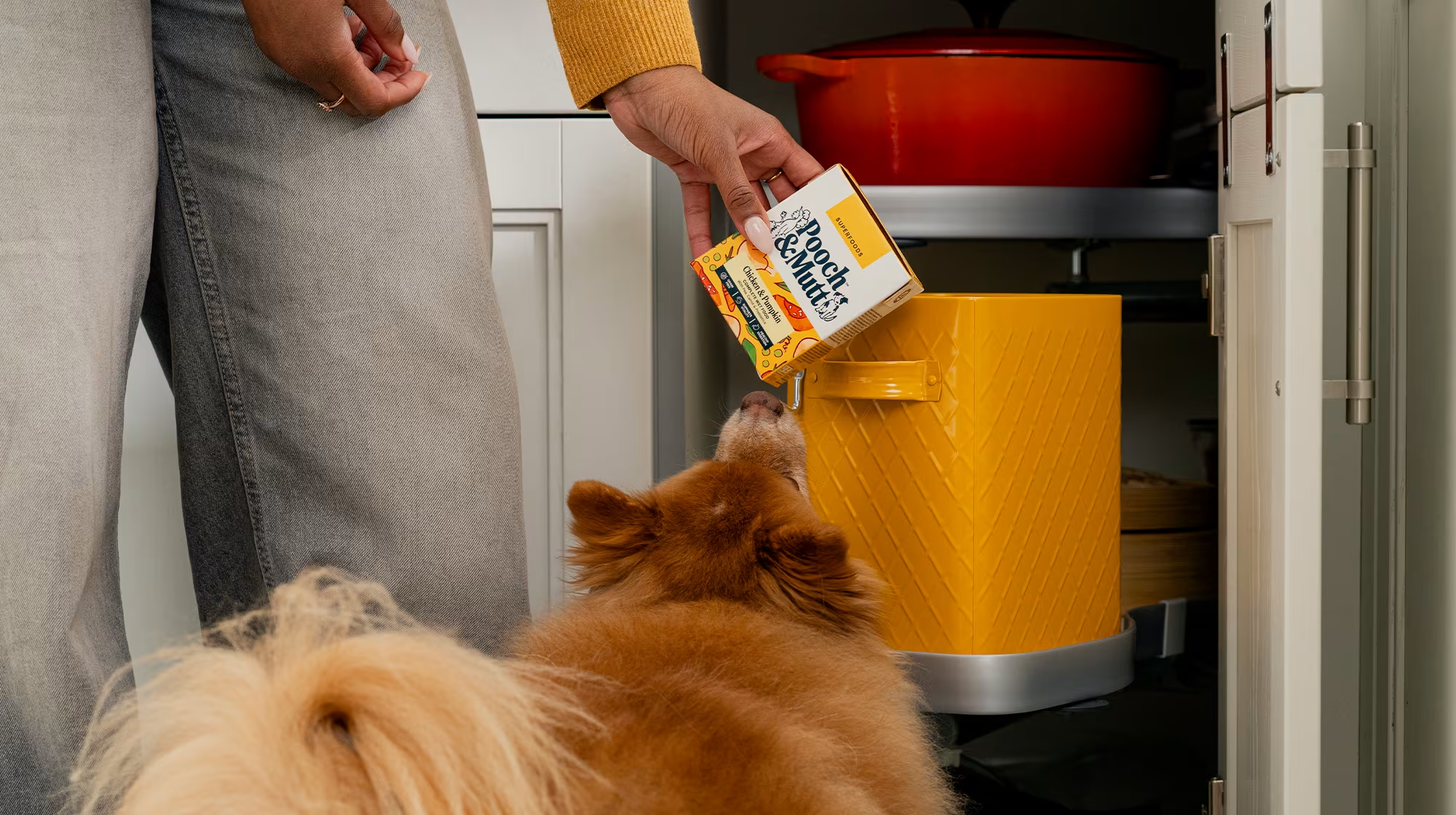
The best food for dogs with Addison’s disease is high-quality Wet or Dry food, preferably with easily digestible proteins, no grains and lots of fruits and veg can all help support your pooch’s overall wellbeing. Sensitive dog food recipes that champion easily digestible proteins and ingredients are particularly recommended as their body doesn’t have to work as hard to break down their food. This helps avoid any additional physical stress on the body, especially when their cortisol levels may already be heightened.
Easily digestible proteins include Chicken, Turkey, and White Fish, as well as Pumpkin, Sweet Potatoes, and White Potatoes.
If your dog has an allergy (or you think they might) then choosing Hypoallergenic dog food will reduce the risk of reaction and potentially leave them feeling worse. Plus, focusing on gut health supplements can also give their immune system an extra boost, which helps your dog recover from symptoms faster.
What not to feed a dog with Addison's disease?
Be sure to avoid fatty, salty foods that are full of fillers and artificial additives. These won’t support your dog’s wellbeing, will leave them feeling hungry and could worsen the symptoms of Addison’s disease.
Digestion
Support sensitive stomachs with our Health & Digestion range. Gut-friendly ingredients aid digestion, nutrient absorption, and overall vitality — to nurture digestive health with ease.
-

 from
fromCurrent price: £8.49
Health & Digestion Dry Dog Food -

 from
fromCurrent price: £1.99
Health & Digestion Complete Wet Dog Food -

 from
fromCurrent price: £4.99
Health & Digestion Fish Hide Chews -

 from
fromCurrent price: £2.49
Fish, Potato & Pea Wet Dog Food -

 from
fromCurrent price: £5.99
Health & Digestion Beef Collagen Chews -

 from
fromCurrent price: £3.99
Health & Digestion Postbiotic Fish Treats -

 from
fromCurrent price: £64.99
The Health & Digestion Bundle -

 from
fromCurrent price: £5.99
Health & Digestion Bone Broth For Dogs -

 from
fromCurrent price: £3.99
Dental Postbiotic Meaty Treats -

 from
fromCurrent price: £3.99
Cheddar Cheese Postbiotic Treats -

 from
fromCurrent price: £19.99
Gastrointestinal Dry Dog Food
FAQs
What is the life expectancy of a dog with Addison's disease?
If a dog is diagnosed and promptly treated for Addison’s disease, they can live a full, happy life!
How to tell if your dog has Addison's disease?
It’s almost impossible to tell if your dog has Addison’s disease because the symptoms are similar to other illnesses. If you suspect something’s wrong, it’s best to give your vet a call as you’ll need them to do the right tests to help diagnose the condition.
How fast does Addison's disease progress in dogs?
This entirely depends on how severe a dog’s symptoms are. For some, the disease can progress gradually. For others, it can come on in a sudden acute attack. This is an emergency and requires immediate veterinary attention.
What can be mistaken for Addison’s disease in dogs?
Depending on how severe a dog’s Addison’s disease is, it can be mistaken for a range of conditions such as pancreatitis, a recent toxicity, or gastrointestinal disease. The only way to know for sure is with the right test at the vet.


