


Key Takeaways:
- Canine hip dysplasia is an inherited condition in which the hip joint doesn’t slot together smoothly, causing mobility issues that worsen over time.
- The condition often leads to arthritis - causing pain, stiffness, and reduced movement as the joint degenerates.
- Hip dysplasia is common in large and giant dog breeds - but your pooch can lead a good quality of life with a combination of diet, supplements, exercise, and vet check-ups.
If your pooch has developed an intriguing ‘hop’ when they walk, or leans on their front legs sometimes, this could be an early sign of hip dysplasia.
It’s especially common in Large and Giant dog breeds such as German Shepherds, Burmese Mountain Dogs, and Labradors (though any dog can get it), and it can cause stiffness, pain and mobility problems without the right support. This makes starting treatment, as soon as it’s noticed, crucial in maintenance and recovery.
What is hip dysplasia?
Canine hip dysplasia (CHD) is an inherited condition in which the dog’s hip joint doesn’t form normally, eventually causing pain in the joint, stiffness, and issues getting up and walking.
In a regular hip bone, the ball fits snugly inside the socket and moves smoothly, but in hip dysplasia, the ball sits loosely, meaning the joint carves irregularly as it moves.
Over time, the hip joint wears down, which means arthritis and other joint issues are likely to develop.

What breeds are most prone to hip dysplasia?
Usually, large and giant breed dogs are more likely to get hip dysplasia, such as:
Great Danes
Bulldogs
However, all dogs, including small dog breeds, can also get it. Large and giant breeds are more at risk simply because their joints are bearing heavier loads.
When does hip dysplasia happen?
Hip dysplasia can develop from a young age, as it occurs during a dog’s growth stage as a puppy, as the hip joint forms.
In large and giant breeds, symptoms might appear between five and twelve months old - though it isn’t clear in some dogs until they’re a few years old, and wear and tear has had time to set in.
This is partly what makes it so tricky to spot - as even if the hip problem is present from early on, the pain and mobility symptoms can take months, or even years, to show.
Symptoms
So how can you identify hip dysplasia in your dog before it causes severe joint pain and mobility issues?
Early vs late stage symptoms
Early signs of hip dysplasia are subtle. You might notice your dog…
Hesitates to jump into the car.
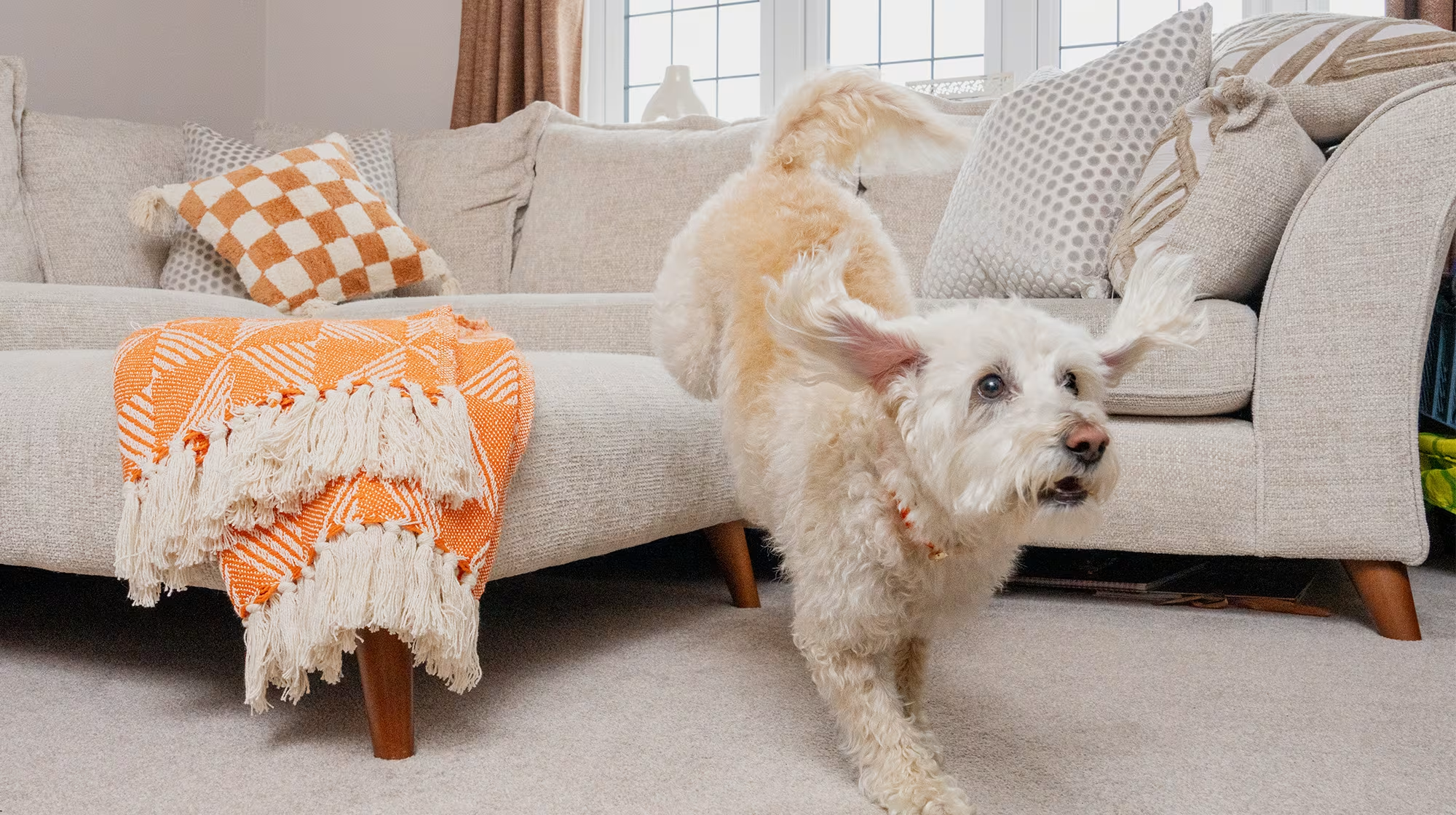
Bunny-hops or hobbles when walking or running.
Has a hard time getting up after sleeping or lying down.
Doesn’t seem keen to go for walks.
Has slowed down in general, or seems uncomfortable after exercising.
As hip dysplasia advances, symptoms will be clearer to see. You might spot the following in your pooch…
They significantly hobble when walking.
Have reduced movement when going up steps, or they refuse.
Seem in pain, get aggressive or yelp when hips are touched.
Clearly don’t want to go out, most of the time.
They’re losing bulk/muscle in their hind legs and hips.
How do I know if my dog's in pain?
Pooches of all breeds tend to hide pain, which is tough for dog parents who just want to make sure their dog is feeling their best.
If your dog is feeling pain in their hips or other joints, you might notice:
Licking or chewing at their hip.
Becoming withdrawn or grumpy.
Sleeping more.
Turning away from their food.
Being unable to relax or get comfortable at night.
In any case, you’ll likely sense that something is off and they don’t seem like themselves.

How is hip dysplasia diagnosed?
If you notice any of the above symptoms, no matter how subtle, it’s a good idea to take your pooch to the vet for an examination.
They will assess your dog with a combination of X-rays and physical checks, take into account the symptoms you’ve explained, and will pay special attention to the range of motion in your dog's hips by testing for looseness (called laxity).
If the X-rays show any sign of socket shallowness or differences in bone shape, your vet can then make a diagnosis of hip dysplasia - or any linked conditions, such as arthritis, that may be developing as a result of it.
Treatment
Once hip dysplasia has been identified in your pooch, treatment can range from ongoing medication and at-home care to specialist physiotherapy, or even surgery for the hip joint in severe cases.
Can hip dysplasia in dogs be treated without surgery?
Yes, and for many dog owners, going without surgery is the preferred treatment - though this is always subject to your vet’s advice.
Non-surgical treatment will usually include:
Anti-inflammatory medications to reduce swelling and pain in the joints.
A healthy, balanced diet with added joint care supplements (such as Glucosamine, Collagen, and Omega-3 fatty acids).
Physiotherapy or hydrotherapy, to keep the joints and muscles mobile, strong and limber without causing your dog more pain.
A weight management plan, to reduce load-bearing stress on the hips and leg joints.
Lifestyle changes, like swapping runs outside or climbing hills, for low-impact swimming, or gentle walks on the lead.
Average treatment costs for hip dysplasia
The cost of treating your dog’s hip dysplasia can vary, depending on what route you decide to take.
Physiotherapy and hydrotherapy sessions can cost £30-£60, and build up to a substantial amount over time. Whilst ongoing medication and joint-care supplements can also add to the final treatment cost.
The most costly treatment is surgery, which ranges from around £1,500 for a femoral head ostectomy (FHO) to £3,000 - £6,000+ per hip for a total hip replacement (THR).
What type of surgery is used for hip dysplasia in dogs?
Your vet can let you know whether your dog is a good candidate for surgery for hip dysplasia, and if so, it will usually fall into three severity levels:
Triple Pelvic Osteotomy (TPO) is performed in young dogs before arthritis has set in, and basically tries to reposition the hip ball and socket before arthritis can occur.
Femoral Head Ostectomy (FHO) involves removing the ball of the hip joint entirely, so that the surrounding muscles form a ‘false joint’ in its place. It's a simpler, less invasive procedure than a full hip replacement, and is often suggested for small dogs.
Total Hip Replacement (THR) is usually suggested for dogs with significant pain and deterioration in their hip. Much like a hip replacement in humans, the entire hip joint is replaced with a prosthetic implant. It’s severe surgery with a long recovery process, but afterwards, the dog’s movement can be hugely improved.
Prognosis
Though hip dysplasia can’t be ‘cured’, many dogs with the condition can lead a good quality of life, with loving support, care and management of their symptoms to keep them strong, healthy and active. Regular vet check-ups are also key to staying in tune with how the hip is progressing.
Long-term care for hip dysplasia
Dogs with hip dysplasia require long-term care to keep them comfortable and safe, in the same way a dog with arthritis would.
Focus on gentle, regular exercise rather than strenuous runs, climbing, or rough games - more like short daily walks that get them some movement and fresh air without putting pressure on their body.
Set up your home for a wobbly dog with orthopaedic bedding and cushions, ramps instead of steps or stairs, and perhaps raised food and water bowls.
Feed them healthy food for joint care and mobility, full of lean proteins to maintain their weight, and natural, joint-boosting ingredients to strengthen their joints.
Book in regular vet check-ups to stay on top of your dog’s condition. This could mean tweaking their pain medication and anti-inflammatories, or considering whether surgery is an option.
Can hip dysplasia in dogs be prevented?
As hip dysplasia is an inherited condition, there’s no way to prevent the mutation developing - though with the aforementioned lifestyle, medication and dietary choices, you can really cushion and even slow the effects of your dog’s hip dysplasia.
One of the most effective methods is to not overfeed your dog as a puppy, especially if they’re a breed prone to the condition. If a puppy is carrying more weight than necessary, it can speed up the degradation of the hip joint.
In some cases, dog owners opt for a Triple Pelvic Osteotomy (TPO) for a dog younger than 10 months who is known to have hip dysplasia. This helps prevent the painful joint issues by ‘correcting’ the hip before symptoms have a chance to take hold.
As surgery on a puppy is intrusive and involves a long recovery process, many dog owners choose to pre-emptively manage symptoms instead. Your vet can chat to you about this.
Screening for hip dysplasia
If you’re considering getting a dog of a breed prone to hip dysplasia, in the UK, there’s the BVA/KC Hip Dysplasia Scheme, which scores dogs' hips based on X-rays. A lower score on the test means a healthier hip formation.
Screening doesn't guarantee your puppy won't develop hip dysplasia, but it’s a good indicator that they're at lower risk. If you’re getting a puppy from a breeder, you can ask to see hip screenings of the dog’s parents (responsible breeders usually do this as standard).

What's the best dog food for hip dysplasia?
If your dog is showing early symptoms of hip dysplasia, feeding them a specialist diet from the get-go can make a big difference in how their body manages as they age.
Being on the heavy side can put strain on their joints, so a weight maintenance dog food that helps keep them healthy is useful. Try a balanced recipe such as Pooch & Mutt Slim & Slender, which contains 45% Fresh Chicken, Sweet Potato and supplements like Linseed and Glucosamine.
Dog food specifically for joint care is also great for supporting their day-to-day movement, often containing oily fish like Salmon or Herring for its powerful Omega-3 and -6 fatty acids. Salmon Oil is a great way to get extra Omegas into their everyday diet.
Other natural joint-protecting supplements such as Glucosamine & Chondroitin or Green-Lipped Mussels are proven to help protect cartilage, build bone strength, and reduce inflammation in their joints.
Prebiotics and Postbiotics can also promote harmony in a dog’s gut, supercharging your pooch’s immune system, reducing inflammation all over the body, and boosting their mood, too.
The gut-joint axis and hip dysplasia
You may have heard of the gut-brain axis, but what about the gut-joint connection? Recent studies have shown that the gut microbiome plays a key role in regulating systemic inflammation, which is a major driver of arthritis, a common condition linked to hip dysplasia.
This means that a healthy, balanced diet, infused with gut-calming ingredients such as Prebiotics and Postbiotics, may have some influence on easing your dog’s joints by contributing to bacterial harmony in your dog’s gut.
When to see a vet
If you’ve recently got a puppy whose breed is prone to hip dysplasia, have a chat with your vet about the condition during their initial check-ups, so you can be aware of the early signs if they develop.
If your dog is fully grown and you’ve recently noticed stiff joints, a ‘bunny-hop’ movement when they walk, or an unusual swaying gait, that’s the time to get your dog to the vet for an assessment.
Catching your dog’s hip dysplasia early offers you the best chance of managing it, keeping them happy, healthy and mobile for years to come.
Joint Care
Support healthy joints and maximum movement with our Joint & Mobility range. Carefully selected ingredients help improve mobility, soothe aches and pains, and reduce inflammation — helping bring joy back to joints.
-

 from
fromCurrent price: £15.99
Joint Care Dry Dog Food -

 from
fromOriginal price:
£10.99Current price: £8.99
Mobile Bones Dog Joint Supplement -

 from
fromCurrent price: £14.99
Joint Tablets For Dogs -

 from
fromOriginal price:
£11.49Current price: £9.49
Salmon Oil For Dogs -

 from
fromCurrent price: £18.99
Gut-Joint Matrix Supplement -

 from
fromCurrent price: £35.99
Joint Health and Inflammation Bundle -

 from
fromCurrent price: £24.49
The Joint Care Bundle
FAQs
What food is good for joint and mobility support?
When it comes to our Joint Care range, we make sure to use specially selected ingredients that are known for their properties that support joint and mobility health. These include Salmon, a rich source of omega-3 essential fatty acids (EFAs) that are vital for joint well-being, Green Lipped Muscle, Rose Hip, Linseed and Alfalfa, which is known for supporting joint health and providing relief from arthritis.
Is collagen good for dogs with arthritis?
Yes, collagen is a really useful supplement for dogs with arthritis and other conditions which cause aching joints or reduced mobility. In combination with other joint-boosting supplements such as glucosamine and chondroitin, it can form a super group of natural aids for your pooch’s bones and joints. Always speak to your vet before giving supplements to your arthritic dog, especially if they are already on medication.
How do I find out if my dog's joint issues are linked to their gut?
Joint issues can be linked to a variety of health conditions, but can be drastically worsened or caused by an unbalanced gut microbiome or late-stage dysbiosis. The only way to rule out dysbiosis and gut inflammation as the cause of your dog's joint issues is to perform a Gut Health Test. Be sure to explore our Gut Health Test at Pooch & Mutt to find out more.
What are the most common joint problems in dogs?
Arthritis is the umbrella term for many degenerative joint issues in dogs. The most common form of arthritis is Osteoarthritis. Other common joint issues in dogs include:
Luxating Patella
Hip dysplasia
Elbow dysplasia
Cranial cruciate ligament tears
Are green lipped mussels better than Glucosamine for dogs?
One isn’t significantly ‘better’ than the other; they both work well together when it comes to joint protection, but in different ways. Green lipped mussels provide omega-3 fatty acids and other anti-inflammatory ingredients that help reduce joint pain and stiffness, while Glucosamine focuses on supporting cartilage structure and slowing its breakdown. Many joint supplements for dogs actually combine the two, as they complement each other well.
How do I know my dog is suffering from joint issues?
There are a few signs to look out for that may indicate your dog is suffering from joint pain and mobility issues. These may include: Limping Mood changes Licking at the area that hurts Reduced movement Whimpering when doing strenuous activity A reluctance to climb stairs or jump on/off the sofa, and stopping during walks If you fear your dog is suffering from joint issues, but sure to check in with your vet.
Is it good to walk a dog with hip dysplasia?
Yes, it's a good idea to keep walking your dog with hip dysplasia to avoid stiffening and tightness. Keeping them moving is key, but it's crucial that you adapt the kind of walks they go on so they don't do any further damage. Try short, gentle walks, ideally on grass, to keep them moving and agile.
References:
‘Gut Microbiome and Osteoarthritis: Insights From the Naturally Occurring Canine Model of Osteoarthritis’, 2024 - Arthritis Rheumatol, PubMed.
‘Diagnosis, prevention, and management of canine hip dysplasia: a review’, 2015 - Vet Med, PubMed.


