


Key Takeaways: - Limping in dogs could be due to an injury, like a cut or sprain, or a health condition attacking the joints or muscles, such as arthritis or Lyme disease. Your dog might start limping suddenly (acute limp) or gradually over time (chronic limp).
- If they continue to limp whilst walking, watch them for a while to identify where in their body the problem might be.
- Consult your vet if your dog has seriously injured themselves, starts to show signs of pain, or if the limp doesn’t go away within a couple of days.
Dogs can limp for several reasons, from something being stuck in their paw to progressive joint issues that require long-term medical attention.
To make it even more puzzling for you as a dog owner, a limping dog will often try to walk on their leg regardless, so it can be tricky to assess whether they’re in pain or not, and whether it’s time for a call to the vet.
We’ll explore reasons why your dog might be limping, as well as the ways you can help your pooch regain their balance and mobility, and get the spring back in their step!
Reasons why your dog is limping
Your dog might have slowly developed a worsening limp, or it might have suddenly come on out of nowhere. Here are some potential reasons for sudden limping (acute) as well as long-term (chronic) limping.
Why is my dog suddenly limping?
Acute limping in dogs can be caused by:
Stepping on something sharp
Rolling their foot or falling
A sore toenail or injury to their paw pad
Muscle spasm in their leg, shoulder or back
Sudden pain in their joint or a ligament injury
A broken bone or a fracture
Overgrown claws, including their dew claw
A foreign object stuck between their toes like a stone, a rock, or a seed (Grass seeds can easily get stuck in paws and may require medical attention.)
Why is my dog always limping?
Long-term or chronic limping in dogs can be caused by:
Arthritis, or a degenerative joint disease
Hip dysplasia
Osteosarcoma or Bone cancer
Tick-borne illnesses, like Lyme disease
Inflammation linked to their gut health
Other progressive neurological conditions
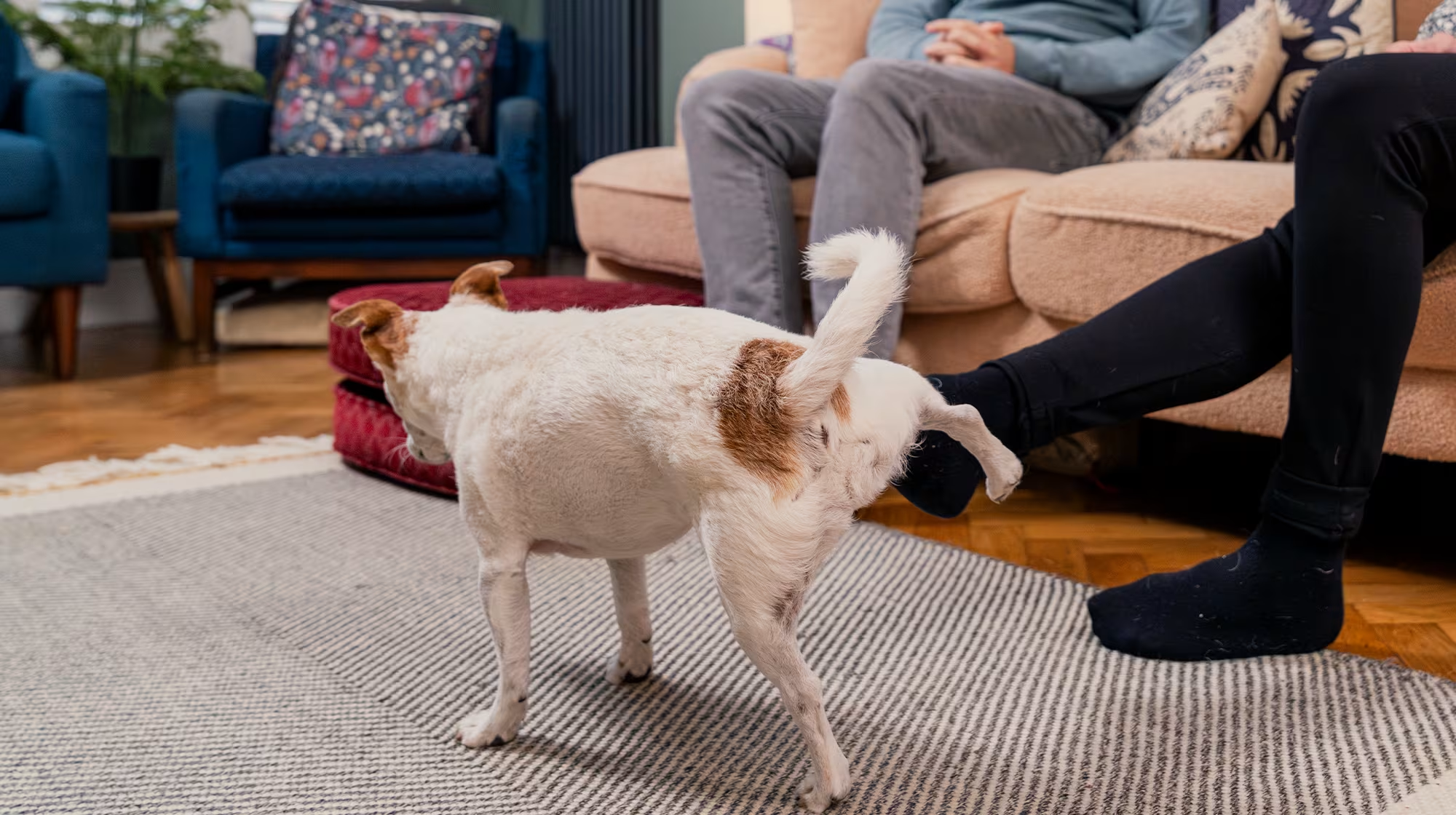
Why is my dog limping on their front legs?
If your pooch is having problems walking on their front legs, they will shift their weight backwards and lift their head in an effort to balance when walking.
They’ll often walk with a head bob, and the limb they are standing on when their head is up is commonly the one causing them pain.
Limping specifically on their front legs can indicate a number of health conditions, including
Elbow or shoulder dysplasia
Abnormalities in bone growth in the front legs.
If they’re lifting either one of their front paws whilst walking, be sure to double-check their paws first to see if they have any claw or toe injuries (particularly near the dew claw), paw pad injuries, or something stuck between their toes.
If their paw or legs seem reasonably healthy, and they’re still limping, be sure to check in with your vet for further investigation.
Why is my dog limping on their back legs?
If your dog is unable to walk on their back legs, it may cause them to lurch forward in a ‘bunny hop’ and rest on their front legs.
If they’re lifting either of their bag legs when walking, be sure to check for any injuries or anything stuck in their paws.
If you can’t see anything, be sure to grab a second opinion from your vet just in case.
A dog’s back legs will be most affected by:
Hip dysplasia
Legg-Perthes disease
A kneecap injury, or a Luxating Patella
They’ve injured their Achilles tendon or their Cruciate ligament (the back knees.)
Why is my dog limping on all four legs?
Is your pooch wobbly on every leg? Health conditions such as arthritis and osteoarthritis, spinal problems, or general muscle and nerve conditions can affect both back and front legs, sometimes all at the same time.
In this case, they may show a reluctance to move or put any weight on their legs.
If your usually active pooch has begun to slow down, or even started shuffling or dragging themselves along the floor, be sure to get them to a vet immediately.

Why is my puppy limping?
Like older dogs, puppies too can can injure their paws, claws, or get something stuck between their toes which may cause them to temporarily limp.
Alternatively, larger breed puppies can suffer from Panosteitis, which is pain and inflammation that stems from their rapid growth. We more commonly know them as growing pains! If your pup's limp doesn't seem to be going away, be sure to check in with your vet.
Dog breeds prone to joint problems
Any dog breed can end up with a limp, especially if they’ve stood on something or injured themselves.
Plus, any dog can get a health condition affecting their joints, such as arthritis or osteoarthritis.
Large or giant breeds, however, are the most at risk of joint issues, simply because their larger weight and frame put more stress on their bodies.
These breeds include:
Great Danes
Mastiffs
These bigger dogs are also more affected by elbow, shoulder and hip dysplasia (though again, any pooch can get these conditions). Working dogs of any breed may also be more at risk of their joints and ligaments becoming injured, as well as senior dogs, and dogs that are obese or carrying extra weight.
What to do if your dog is limping
If you’ve noticed your dog is limping, we know it can be worrying, but getting to the source of the issue can ease your mind and get your pooch on the mend!
Here are some ways to assess the damage, step-by-step:
Try to stay calm and curious; if your pooch picks up on your stress, they might start to panic.
Observe your dog walking, checking which legs seem to be affected - whether it’s one leg, the front or hind legs, or all legs at once.
Check your dog for severe swelling, injuries or hot spots by gently feeling over their legs, shoulders, paws and back. Also be sure to double check whether their limb is dangling at an unnatural angle, or in more major cases, if there's any bone protrusion. If so, be sure to get them to the vet immediately.
If you think your pooch has a superficial injury, like a sprain or a cut to their paw, take them home to rest and recover.
Remove any objects stuck in their feet. Use tweezers and some dog-safe antiseptic cream to remove glass, sharp stones or sticks that may have caused an injury.
Clean and dress any minor wounds if necessary, or try a cold compress and raise their leg on a cushion if you suspect a minor sprain.
See a vet as an emergency. If you suspect an injury is serious, if limping persists for more than 24-48 hours, if there are visible injuries, or if your dog appears to be in immediate pain.
Signs your dog is in pain
A lot of the time, your dog might continue to walk along while limping, seemingly unbothered.
They could still develop pain, even if they don’t feel it straight away, so be sure to keep an eye on them for any signs of it becoming worse.
Signs your dog is in pain include:
Is licking or chewing certain areas, especially in the legs or feet
Persistently whines or nudges you for attention
Keeps hunching or shifting their weight
Refuses to move, or can’t continue to walk
Has a loss of appetite, or becomes lethargic
Has a visible injury or swelling
If they’re demonstrating any of these signs, especially whilst limping, book in to see your vet immediately.
Treatment for limping in dogs
Let your vet know if your dog has any existing health conditions or regularly has joint pain or mobility issues.
From there, they will likely examine your pooch in the same way you have - they’ll feel for swelling or hot spots, watch them try to walk, and assess if your dog is in pain.
From here, they may conduct an X-ray or scan to find injuries or evidence of a potential long-term health issue.
Depending on the diagnosis, your vet could prescribe pain relief and/or anti-inflammatories, or they might recommend physiotherapy.
You and your pooch might have to come in for further tests if your vet suspects a long-term health condition, such as arthritis.
If your dog has a superficial injury, resting at home until they’re fully recovered is usually the best medicine.

What is the best food for dogs with joint issues?
Dogs with sore limbs deserve wholesome, nourishing meals to restore their strength, full of ingredients that help support their muscles and cartilage. As being overweight puts extra pressure on a dog’s joints, joint support dog food is usually made with low-fat ingredients for maintaining a healthy weight. A tasty, high-quality dog food for joint pain will often contain:
Lean proteins such as Chicken or Salmon
Glucosamine, Chondroitin, and Collagen to help maintain, protect and help repair cartilage
Natural supplements for dogs with joint pain
Salmon Oil for Dogs is a wonder elixir for joints and a dog’s entire body, as it contains essential omega-3 and -6 fatty acids. These long-chain fats do so many things for a dog: they soothe joint pain for boosted mobility, support skin and coat health, reduce inflammation, contribute to brain and heart function, and strengthen the immune system. Lots of dogs love the fishy taste of Salmon Oil, so you can just drizzle it over their food.
Green-lipped mussels are also a proven natural supplement to ease a dog’s joints; they’re often found as an ingredient in joint care supplements for dogs. Other powerful joint-boosting supplements include Glucosamine and Chondroitin, and Collagen.
Our Gut-Joint Matrix Supplement contains 6 diverse probiotic strains which help maintain mobility, support the gut-joint axis, and contribute to a healthy immune system. This is great for when dysbiosis, or an unbalanced gut microbiome, is the root of their joint inflammation. This can be indicated through a Gut Health Test.
Joint Care
Support healthy joints and maximum movement with our Joint & Mobility range. Carefully selected ingredients help improve mobility, soothe aches and pains, and reduce inflammation — helping bring joy back to joints.
-

 from
fromCurrent price: £15.99
Joint Care Dry Dog Food -

 from
fromOriginal price:
£10.99Current price: £8.99
Mobile Bones Dog Joint Supplement -

 from
fromCurrent price: £14.99
Joint Tablets For Dogs -

 from
fromOriginal price:
£11.49Current price: £9.49
Salmon Oil For Dogs -

 from
fromCurrent price: £18.99
Gut-Joint Matrix Supplement -

 from
fromCurrent price: £35.99
Joint Health and Inflammation Bundle -

 from
fromCurrent price: £24.49
The Joint Care Bundle
FAQs
When should I worry about my dog limping?
Sometimes limping in dogs can be put to a superficial injury where they may have hurt their paw pads, rolled their foot, have an claw injury, or anything else where they otherwise seem fine and just require a little bit of patching up or some time to heal. But sustained limping that doesn't seem to stop can be a sign of something more serious that requires vet intervention. Be sure to keep an eye on the leg your dog is limping on and look for signs of swelling, hot spots, bleeding, the limb hanging at an odd angle, as well as other aligning symptoms that isn't normal for your dog. If they are displaying anything out of the ordinary, or there are clear signs of injury, be sure to get them to a vet as soon as possible.
Why is my dog limping without any injury?
If your dog is limping but you can't see any signs of visible injury, it might be that there's something going on with their joints. From arthritis, inflammation, or spinal chord disease - it's best to get them seen by a vet to rule out anything serious, or for a diagnosis so you can kickstart the next steps.
Should you massage a limping dog?
As a worried dog owner, your first instinct might be to massage the limb your dog is limping on. Whilst massaging can be a great way to alleviate pain for your dog, it's probably best to get them checked first to rule out or diagnose the reason for their limp.
This is just to avoid doing any further damage to their limb, especially if there's any chances of spraining, breaks, or fractures.
If massaging would help your dog's limbs, be sure to speak to your vet first on the best, and most helpful, way to do it.
How long does a dog's limp take to heal?
If your dog's limp is just down to a minor injury, it can take a few days to heal. You should your dog licking and tending to it less, as well as gradually putting more weight on it. If their limp is down to more serious joint and mobility issues, it turns to not waiting for it to heal but instead making adaptations to their lifestyle to alleviate pressure and pain.
For example, Arthritis is a progressive disease and can't be cured, but the symptoms can be relieved through adapting walks, your home, and making sure their diet utilises ingredients known for boosting joint health. This can include Salmon Oil, Glucosamine, Chondroitin, and Collagen.
References:
- “The essential fatty acids omega-6 and omega-3: from their discovery to their use in therapy”, 2008 - National Library of Medicine.
- “Therapeutic Effect of Green-Lipped Mussel Oil on Pain and Functional Disability in Dogs with Clinical Osteoarthritis”, 2024 - Journal of Veterinary Clinics.
- “Randomised double-blind, positive-controlled trial to assess the efficacy of glucosamine/chondroitin sulfate for the treatment of dogs with osteoarthritis”, 2007 - National Library of Medicine


