


Key Takeaways:
- Most cats shouldn’t drink milk because they’re lactose intolerant, meaning it can cause digestive issues like bloating, cramps, and diarrhoea.
- Even though kittens can digest their mother’s milk, cow’s milk isn’t suitable for them or adult cats, as it also doesn’t provide the right nutrition.
- If your cat needs hydration, safer options like fresh water, wet food, bone broth or cat-safe milk alternatives are much better than regular dairy.
Cats and milk seem like a perfect match - but in reality, it’s a classic case of wanting what you can’t have.
Most cats love the taste of milk. But, unfortunately for them, many are lactose intolerant, which means they can’t properly digest it.
Read on to find why you can’t trust the cartoons, what lactose intolerance is, what happens when cats drink milk, and how to help a dehydrated cat.
Is milk bad for cats?
Milk might seem like a harmless treat (especially when you see how eagerly they lap it up), but for most cats, it’s not a good idea.
Even a small amount of cow’s milk can upset their stomach, cause diarrhoea, or leave them feeling uncomfortable.
And while your cat may love the taste, it doesn’t provide the nutrients they need and isn’t necessary for a healthy diet.
Some cats may seem to tolerate small amounts of milk without obvious symptoms, but this is relatively rare, and even if a cat seems fine, repeated milk consumption can still cause digestive discomfort.
If you want to give your cat a tasty treat or extra hydration, it’s best to stick to fresh water, wet food, or cat-safe broths instead.
Can kittens drink milk?
Kittens technically aren’t lactose intolerant, but cow's milk still isn’t healthy. And it makes sense why: it’s simply not made for them.
Dairy can cause stomach upsets, bloating, and diarrhoea in kittens, too, because it’s much richer than what they’re used to. Plus, it’s not designed for their digestive system, and it doesn’t hold all of the nutrients your kitten needs to grow, unlike their mother’s milk.
That’s why it’s always best to give your kitten their mother’s milk first, and if this isn’t available, kitten replacement milk is recommended as the next best thing.
Lactose intolerance in cats
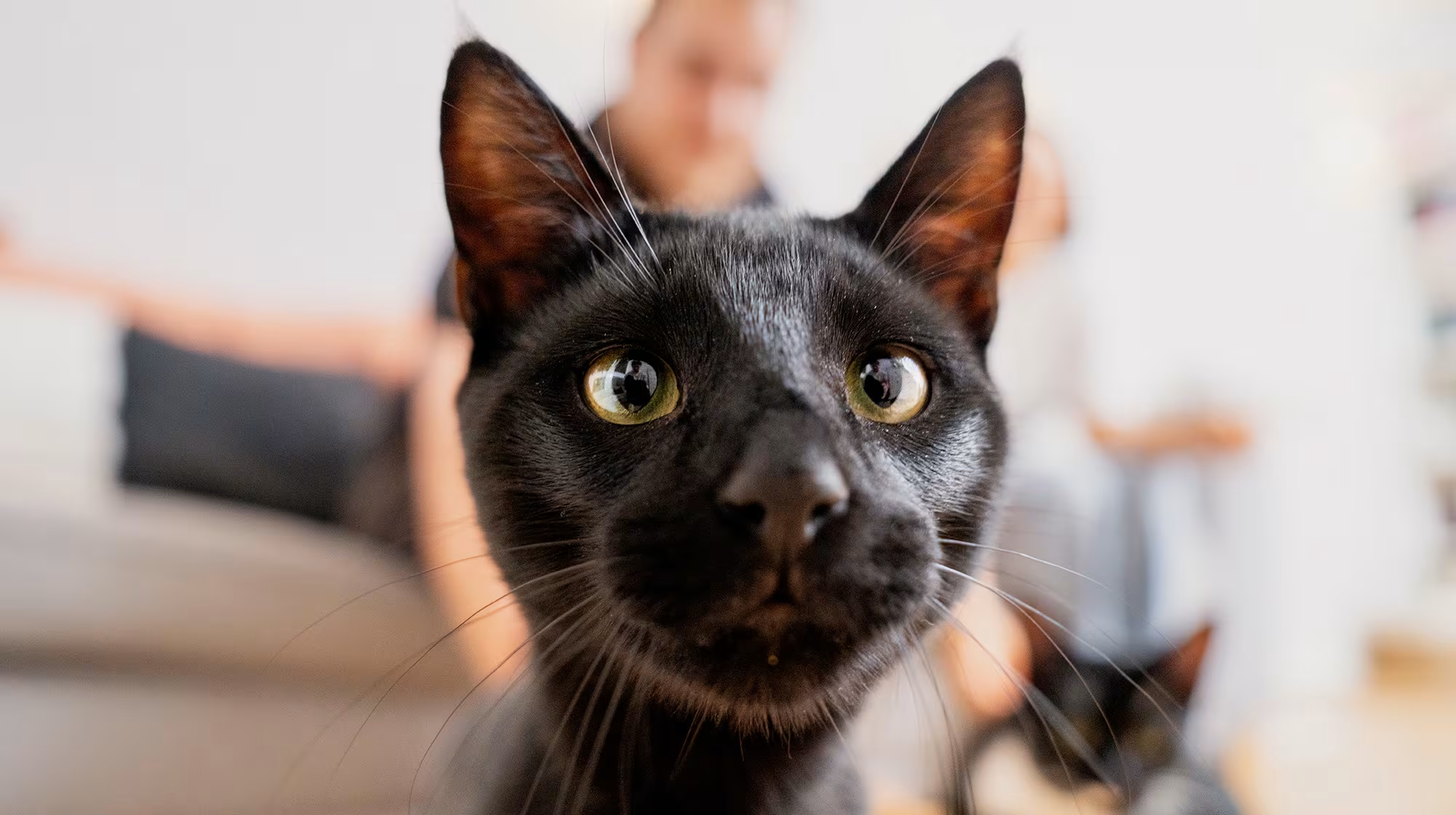
Lactose intolerance is when the body can’t properly digest lactose (the natural sugar found in milk). To break lactose down, the body needs an enzyme called lactase.
Kittens produce plenty of this enzyme so they can digest their mother’s milk - but as cats grow up, they make less and less of it.
That means when an adult cat drinks milk, the lactose isn’t fully digested. Instead, it passes into the gut, where it can cause problems like stomach cramps, bloating, and an imbalance of gut bacteria (dysbiosis).
And even if there aren’t obvious symptoms, your cat may still be experiencing some discomfort.
Most cats are lactose intolerant, so to be on the safe side, it’s best to avoid giving any cat dairy altogether - after all, they can’t tell us when something’s wrong.
Why do we associate cats with milk?
If you didn’t know that most cats are lactose intolerant, you’re not alone. Cats drinking milk’s a really common stereotype, and it actually dates back to farm life in the 18th and 19th centuries.
Cats were kept by farmers to control mice and were given leftover milk and cream from the dairy cows. Over time, this image stuck.
Cats drinking milk from saucers began appearing in art, stories, early advertising, and later in cartoons, like Tom and Jerry, where it became iconic for Tom to drink milk!
So it’s no surprise that we still associate cats with milk today. And while it isn’t actually good for them, that doesn’t stop them from loving the taste.
Cat got the cream, huh?
My cat’s dehydrated; won’t milk help?
Cats have a low thirst drive, so it’s a common struggle for owners to get their cat to drink water.
It’s because they’ve evolved to get most of their moisture from prey, rather than drinking from their water bowl.
Whilst it’s still super important to have that water available, some cats might barely touch it and need extra support to stay hydrated.
Plenty of owners will automatically think of milk - it’s hydrating, it’s tasty, and cats lap it up, but it’s not worth the potential digestive upset.
So what else can we do to encourage them to drink more?
Wet food: Wet cat food contains a high percentage of water, helping your cat stay hydrated without needing to drink as much.
Broths: Bone broth for cats is great for hydration and, due to its meaty goodness, is great for appealing to fussy eaters (or drinkers!).
Fresh, clean water: Change the water daily and use clean bowls - cats are picky and often refuse stagnant or dirty water.
Cat water fountains: Many cats prefer running water (if you were wondering why they refuse to lap out of their bowl). Fountains make drinking more engaging and appealing.
Multiple water stations: Placing bowls in different areas encourages more frequent sips. Do not place a bowl near a food source, as cats have evolved to not drink water found near food.
Cat milk: Specially made cat milk can be a hydrating treat, but it shouldn’t replace regular water.
Can cats drink milk alternatives?
If cats can’t drink cow's milk, what about milk alternatives?
Can cats drink oat milk?
Yes, cats can have plain, unsweetened oat milk in tiny amounts as an occasional treat or hydration boost.
Just watch out for sugar, flavourings, or additives on the ingredients list, and make sure it doesn’t replace any of their usual diet.
Can cats drink almond milk?
Yes, technically, cats can drink plain almond milk in small amounts.
But most shop-bought almond milks contain sweeteners, thickeners, or flavourings which aren’t safe for cats, so always check ingredients!
Can cats drink lactose-free milk?
Yes, lactose-free milk’s actually the safest alternative to regular cow’s milk for cats.
It avoids lactose-related digestive issues and can be given occasionally, but it shouldn’t replace their usual water and food, as it doesn’t provide the nutrients they need.
Can cats drink soy milk?
No, soy milk isn’t recommended for cats.
It’s difficult for them to digest and can cause stomach upsets.
Can cats drink goat’s milk?
No, ideally, cats shouldn’t drink goat’s milk.
Whilst it’s slightly easier for some cats to digest than cow’s milk, it still contains lactose and fat that can upset sensitive stomachs.
FAQs
Is tuna water good for cats?
Yes, plain tuna water can be a useful way to encourage some cats to drink more, especially if they’re reluctant to drink from their water bowl.
However, it should only be given occasionally. Make sure it’s from tuna in spring water, not brine or oil, as these contain extra salt or fat that isn’t suitable for cats.
It’s also important not to give cats too much tuna over time. Tuna is a type of fish that can contain mercury, and eating too much of it regularly may increase the risk of mercury exposure.
Cats also need a complete, balanced diet, so tuna (or tuna water) shouldn’t replace their normal food or water.
My cat accidentally drank milk - do I need to take them to the vet?
In most cases, no. If your cat has only had a small amount of milk, they'll usually be fine.
Because most adult cats are lactose intolerant, you may notice symptoms such as diarrhoea, bloating, gas, or an upset stomach over the next 24 hours. These symptoms are often mild and settle on their own.
However, if your cat has drunk a large amount of milk and develops severe or persistent symptoms, contact your vet for advice.
Why do cats love milk?
Cats are often attracted to milk because of its fat and protein content, which makes it smell and taste appealing.
Our association between cats and milk also comes from stereotypes throughout history. Farm cats were often given leftover milk or cream, and over time, this became a familiar image in books, adverts, and cartoons.
While many cats enjoy the taste, that doesn't mean it's good for them. Most adult cats are lactose intolerant, so it's best to choose cat-safe alternatives if you want to offer them an occasional treat or encourage them to stay hydrated.
Explore Wet Cat Food
-

 from
fromCurrent price: £1.49
Wet Superfood For Kittens -

 from
fromCurrent price: £1.49
Wet Superfood For Adult Cats -

 from
fromCurrent price: £1.49
Wet Superfood Indoor Cats -

 from
fromCurrent price: £1.49
Wet Superfood For Senior Cats -

 from
fromCurrent price: £1.99
Primal Salmon Wet Cat Food -

 from
fromCurrent price: £1.99
Primal Turkey Wet Cat Food
This post was originally published in July 2026, but has been updated for comprehensiveness.


