


Key Takeaways:
- The average, healthy weight for a cat is around 3.5kg to 4.5kg, depending on their height, length and body frame.
- A healthy weight for a cat will depend on their age, size, and breed.
- A cat's weight can fluctuate as they age, or because they have an underlying medical condition. Particularly, if your cat is drastically losing weight, be sure to get them checked by a vet.
Knowing what a healthy weight for cats is takes some practice.
Nowadays, about 50% to 60% of pet cats are overweight, but there are many cat owners that don't even realise it. There is a misconception for many that a lean or toned cat is ‘too skinny’ or ‘underweight’, and we are here to bust that myth.
Achieving a healthy cat weight is one of the most important things you can do for their quality of life and their life expectancy. Being overweight is a big contributing factor when it comes to chronic joint pain and the development of diseases, including diabetes and certain cancers.
How much should a cat weigh?
The normal weight for a cat is around 3.5kg to 4.5kg, depending on their height, length and body frame.
Most cats reach their adult weight by one year old.
Astonishingly, the average weight of a cat has increased by about 10% in the last few decades.
Average weight for common cat breeds
There’s a huge variation when it comes to weight among the different breeds.
Cat Breed | Average Weight (kg) |
Domestic Shorthair | 3.5–5.5 kg |
Ragdoll | 4.5–9.0 kg |
British Shorthair | 3.2–7.7 kg |
Persian | 3.0–5.5 kg |
Siamese | 2.7–6.0 kg |
Bengal | 3.6–7.7 kg |
Sphynx | 3.0–6.0 kg |
Russian Blue | 3.0–5.5 kg |
What can impact a cat's weight?
A wide number of things will affect the number you see on your cat's scales:
Breed
A large breed like a Maine Coon or Bengal is going to naturally weigh a lot more than a petite Domestic Shorthair.
Genetics plays a big role when it comes to body size and overall weight.
Medical conditions
Contrary to what some owners believe, there are not many conditions that directly cause obesity.
Medical conditions are much more likely to cause a cat to lose weight, and the most common examples of these diseases include diabetes, hyperthyroidism and renal disease.
Age
Kittens gain weight rapidly, but this then starts to level off by about the 6-month mark.
Cats usually reach their adult weight by 12-18 months of age, depending on breed.
Weight loss in senior years is not uncommon and typically indicates that there’s a medical issue, such as arthritis or dental disease.
Sex
Male cats are larger and more muscular than females, as a general rule of thumb.
Neutering
Neutering is known to slow metabolic rate and often leads to decreased activity levels.
For this reason, if we don’t reduce the calories we give to our pets after neutering, many start slowly gaining weight.
Nutrition
The most important factor when it comes to our cats’ weight is what we feed them.
If they’re eating calories in excess of what they require, these will be stored as body fat.
How to tell if a cat is overweight
Rather than focusing on the number, it’s far more informative to assess your cat’s Body Condition Score.
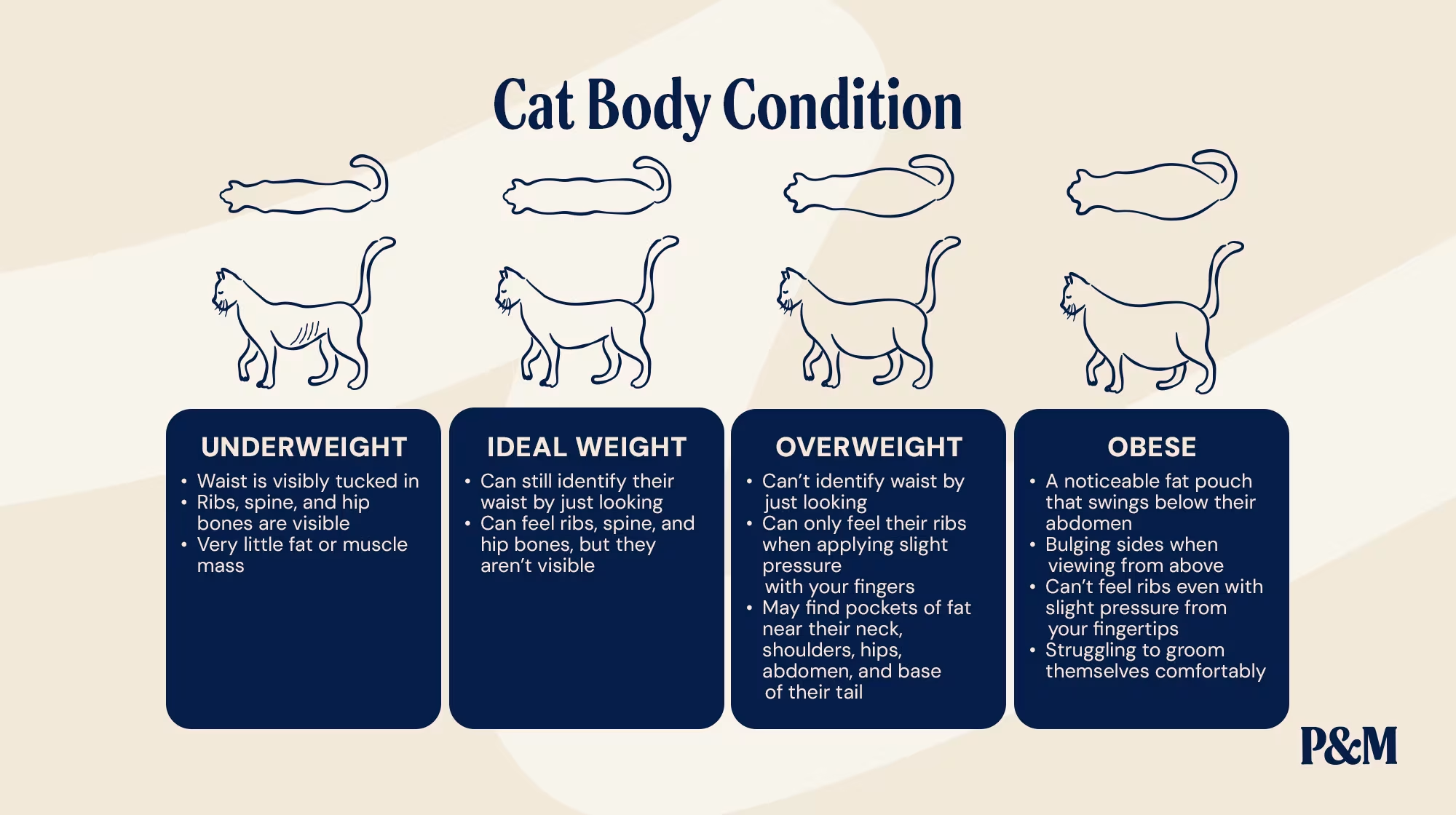
When a cat is overweight:
It’ll be difficult to feel their ribs and spine under their fat
They will not have a visible waist when viewed from above
Their tummy will not be tucked up when viewed from the side
They may have a lot of loose skin under their belly
You might also notice that they are less active and jump less
Why might a cat be gaining weight?
For most cats, weight gain is a slow creep that occurs because they are being fed too much and are not as active as they should be.
Some cats overeat due to boredom, stress or anxiety disorders.
Much less commonly, we are dealing with a medical issue such as tumour growth or ascites (fluid build-up).
How to check if your cat is underweight
If your cat is underweight, you’ll find that they look and feel more bony.
Their spine, ribs and pelvic bones all become more prominent. They will have little fat covering, and their waistline will be very obvious.
Why might a cat be losing weight?
A cat that’s losing weight usually has a medical issue, and some of the more common causes of weight loss include:
An overactive thyroid
Diabetes
Cancer
Dental disease
Liver disease
Kidney failure
Parasites
CIE (Chronic Inflammatory Enteropathy)
How to help your cat maintain a healthy weight
Your first step should be to determine what your cat should weigh according to their age and breed, and what their daily calorie requirement is.
You can then weigh their food portions out each day or use an automatic feeder.
Be conscious that any treats or titbits you give should be included in their daily calorie allowance.
How to help your cat lose weight
Fundamentally, reducing weight will mean reducing calories.
Ensure your cat is getting a premium and balanced diet which meets all of their nutritional needs. Ideally, aim for a food that has protein as the first ingredient.
You can speed up weight loss by encouraging movement. This can mean having more vertical spaces in the home, scattering dry food for your cat to find at meal times, and dedicating more time to playing.
When should you feed your cat less?
There are some times in life when your cat’s calorie requirements dip, and they should be offered less food. This includes:
Once they have finished their largest kitten growth spurt
After neutering surgery
At periods of lower activity, such as when in a cattery
If their Body Condition Score has increased above ideal
What do you do if your cat is being fed by neighbours?
It’s a common issue for well-meaning neighbours to offer cats treats or even full meals!
To prevent this, it’d be good to invest in a collar which states ‘Do Not Feed Me’.
It can also be useful to have a chat with your neighbours or to send a ‘No Feed’ alert in your local WhatsApp or Facebook group, with a photo of your cat.
FAQs
What is a healthy weight for a cat?
The right weight depends on several factors, including your cat’s length, height and muscle mass. Aim for a body condition score of 4 or 5 out of 9.
Is my cat overweight?
Your cat is overweight if their Body Condition Score is a 6 out of 9 or more. They will have excess fat, making it harder to feel and see their skeleton.
What happens if a cat gets too overweight?
Obesity in cats can put a strain on various areas of their health including their hearts and joints, and it also increases the risk of other medical conditions like cancer, arthritis, and diabetes.
Vet-Approved Cat Food
Our grain-free, junk-free dry food for cats is specially formulated to support overall health, wellbeing, and vitality. With no added sugar, all recipes are packed with high-quality protein, natural superfoods, and prebiotics for gold star gut health, ensuring optimal nutrition for your kitty, and peace of mind for you.
-

 from
fromCurrent price: £19.49
Primal Salmon & Herring Dry Cat Food -

 from
fromCurrent price: £19.49
Primal Duck & Turkey Dry Cat Food -

 from
fromCurrent price: £11.99
Dry Superfood For Indoor Cats -

 from
fromCurrent price: £11.99
Dry Superfood For Adult Cats -

 from
fromCurrent price: £11.99
Dry Superfood For Senior Cats -

 from
fromCurrent price: £11.99
Dry Superfood For Kittens -

 from
fromCurrent price: £1.99
Primal Salmon Wet Cat Food -

 from
fromCurrent price: £1.99
Primal Turkey Wet Cat Food -

 from
fromCurrent price: £2.99
Primal Sprat & Salmon Fish Jerky For Cats -

 from
fromCurrent price: £1.49
Wet Superfood For Adult Cats -

 from
fromCurrent price: £1.49
Wet Superfood For Senior Cats -

 from
fromCurrent price: £1.49
Wet Superfood Indoor Cats -

 from
fromCurrent price: £1.49
Wet Superfood For Kittens
This post was originally published in July 2026, but has been updated for comprehensiveness.


