


Key Takeaways:
- Lyme disease is a rare and potentially serious condition in dogs, contracted by bacteria in tick saliva.
- Dogs can make a full recovery if treatment starts early, but early symptoms can be subtle and hard to detect.
- The best prevention for Lyme disease is protecting your pooch from ticks all year round, but especially during the spring and summer months, and late autumn.
If you’ve looked into the dangers of ticks on dogs, you’ve probably come across Lyme disease, a potentially serious condition contracted by tick bites.
As ticks are more active during the spring and summer months, and in late autumn this is when it’s most sensible to check your dog over after walks in nature, and to stay aware of the early signs of the disease.
Read on to learn about the causes, signs and stages of Lyme disease, as well as preventative measures to keep ticks at bay.
What is Lyme disease?
Lyme disease is caused by the Borrelia burgdorferi bacteria, which are transferred to a host (such as a wandering dog) via tick saliva.
At first, it might only cause soreness at the bite, but if left to spread, the bacteria can get into the dog’s bloodstream and make them ill - potentially affecting their joints, heart, brain, kidneys, and spinal cord.
This makes tick bites particularly risky for dogs, though not every tick carries the bacteria for Lyme disease, and many dogs won’t see any symptoms at all.
How common is Lyme disease in dogs?
Though it’s tough to track cases, studies show that dogs living in rural areas are more at risk of getting Lyme disease due to tick exposure (though any dog who wanders in green spaces can get bitten).
However, not all ticks are carriers of the Lyme-causing bacteria, and not all dogs infected by the bacteria get sick. Scientists found that many dogs with traces of the bacteria in their blood never got sick at all, but developed an immune response naturally.
It’s thought that only around 5-10% of dogs who have been bitten by an infected tick will develop symptoms of Lyme disease (2) - so chances of contracting it are relatively rare.
That said, there does seem to be an upward trend of dogs getting Lyme disease in the UK over the last few decades, and with rising temperatures, ticks will be active for larger portions of the year - so the risk may mildly increase.

Symptoms
Catching Lyme disease early is so important, so what are the symptoms to look out for?
An important note is that symptoms of Lyme disease might show from a few weeks to a few months after your dog was bitten by a tick. So even if they haven’t been walking in rural, grassy or wooded areas lately, or you spotted a tick a while ago, it’s still very possible they’ve been infected.
What are the first signs of Lyme disease?
Within the first 30 days of contracting the disease, the signs are subtle:
Mild fever
Lethargy, loss of energy
Swollen lymph nodes in the face and/or body
Loss of appetite
You might notice stiff joints or difficulty walking
Diagnosis
If you’ve noticed these first signs, seeing your vet straight away will get you a clearer evaluation.
Lyme disease is tricky to detect in the early stages; your vet will likely take blood and urine samples, and possibly joint fluids, and will need to hear about your dog’s tick exposure in recent months.
They will then make a call over whether these combined symptoms could be early stages of Lyme disease.
What are the 3 stages of Lyme disease in dogs?
When Lyme disease is diagnosed, it’s assigned one of three stages…
Stage 1: At this early stage (3-30 days after exposure to bacteria), your dog may show no symptoms at all.
Subtle symptoms that might show are a mild fever, lethargy, and swollen lymph nodes in your dog’s body. Your pooch may start to walk in an unusual way or seem stiff in their joints.
Stage 2: Without treatment at Stage 1, the bacteria start to affect other parts of the dog’s body.
Symptoms may continue as above, but your dog might also get ‘shifting leg lameness’, where they seem unable to stand on one leg, then a different leg.
Stage 3: At Stage 3, symptoms can really affect the dog’s quality of life. They can experience chronic arthritis, persistent and severe joint pain, and reduced mobility.
At its most severe, Lyme disease can impact the nervous system, heart, and kidneys - and for some dogs, this can lead to fatal kidney failure.
Treatment and Prognosis
If caught early, Lyme disease can be treated with a course of antibiotics and pain relief, and many dogs make a full recovery.
When Lyme disease is more advanced, your pooch will likely need ongoing care, medication and supportive treatment for their symptoms. Whether that’s joint pain, kidney issues or reduced mobility. Some dogs may need to be cared for in a hospital for periods of time when symptoms flare up or worsen.
Can Lyme disease in dogs be cured?
The chances of curing Lyme disease are excellent if you catch it early.
Dogs can go on to make a full recovery with a course of antibiotics in just a few weeks.
If the disease progresses to other parts of the body, it becomes more of a case of managing their symptoms and providing ongoing support throughout their lives.
Dogs with the right treatment and care can lead full lives with advanced Lyme disease. For some, the disease can put them at risk of serious health complications, such as kidney failure or severely reduced mobility.
Caring for a dog with Lyme disease
Caring for a pooch with Lyme disease is all about supporting their recovery and keeping up their strength.
You can do this with a combination of medication prescribed by your vet, a calm and supportive environment, regular movement, and a healthy, well-balanced diet full of fresh food. One that helps support their gut, reduces inflammation and boosts their immune system.
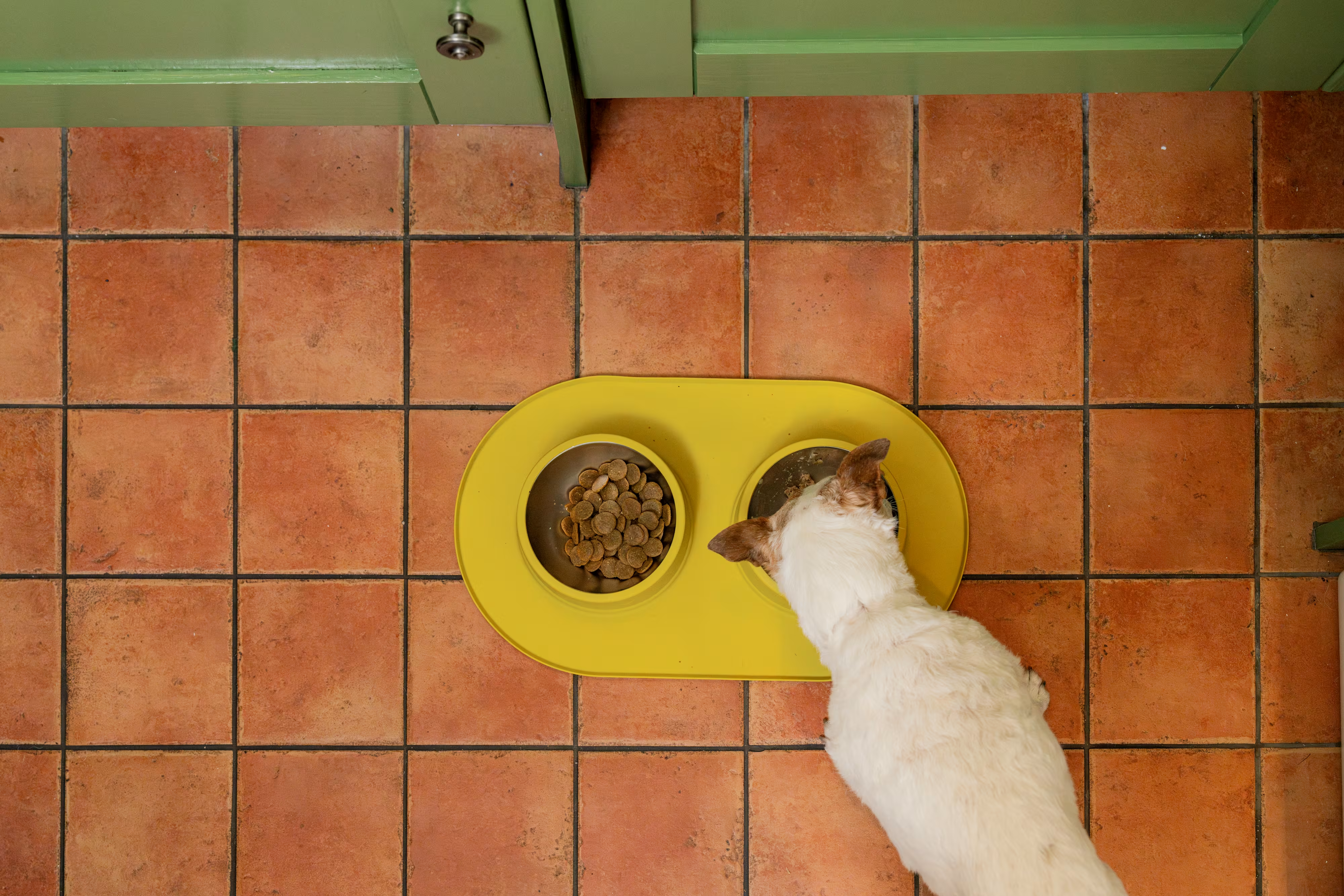
What to feed a dog with Lyme disease
High-quality, digestible proteins like Fresh Chicken or White Fish can build up your pooch’s muscles and fuel their energy, without overloading their digestive system.
Dog food for Joint Support contains powerful ingredients such as Salmon, Glucosamine & Chondroitin, and Green-Lipped Mussel, which is proven to help slow the degradation of joint cartilage.
Food to maintain a healthy weight in your dog is also key to reducing pressure on their joints, so they can get around more easily. Try a diet full of lean and filling proteins, fresh fruit and veggies.
Joint Care supplements, such as omega-rich Salmon Oil for Dogs can ease inflammation in your dog’s body and support movement and healing.
Does Lyme disease impact a dog's gut health?
Though there’s no direct impact on the gut, the stress and antibiotic treatment involved in managing Lyme disease can somewhat wreak havoc on a dog’s delicate gut balance.
In turn, a turbulent gut can cause digestive issues and low mood in your dog via the gut-brain axis.
Help soothe your dog’s symptoms with a blend of pre- and postbiotics, gently digestible proteins and healthy, well-balanced ingredients so your dog is supported in tackling Lyme disease from the inside out.

Preventing Lyme disease
The golden technique for Lyme disease prevention is protecting your dog from ticks wherever possible.
This is especially true if you and your dog regularly wander together in parks, forests and countryside.
Examine your dog regularly for ticks, especially after walks, and more often in April-July, and late autumn when ticks are most active. Safely remove ticks from your dog if you find any - the sooner you remove them, the less likely the chance of bacteria transfer.
Maintain your garden. If you have wild grassland or thick vegetation around your home, consider keeping it trimmed back and well-maintained so that ticks are less likely to appear where your dog likes to wander.
Keep your pooch fit and healthy with exercise and an optimised diet to keep their strength and their immune system up. This can help your dog’s body fight off the bacteria if they happen to get it.
Regularly visit your vet for general check-ups, especially if you live in areas where your pooch may pick up parasites or illnesses from the wilderness. Your vet can also issue tick preventative medicine, which comes as a tablet, spot-on or collar.
When to contact your vet
If you’ve recently removed a tick from your dog and they’re showing early signs of Lyme disease - such as lethargy, swollen lymph nodes, a fever, stiff joints or shifting lameness - get in touch with your vet right away.
This way, they can carry out tests and get your pooch the treatment and care they need to make a full recovery.
FAQs
Can a dog recover from Lyme disease without treatment?
It’s unlikely and not recommended, as dogs respond well to early treatment. Without antibiotics, symptoms of Lyme can worsen and lead to longer-term joint or kidney issues.
What can be mistaken for Lyme disease in dogs?
Sometimes the limping and stiff joints can be mistaken for mobility issues like arthritis or tendon injuries from regular exercise. The subtle symptoms of early Lyme disease (fever, lethargy) can be overlooked as just being unwell or out of sorts.
What is the biggest symptom of Lyme disease?
The trademark sign is shifting lameness, where a dog limps on one leg, then seems fine, then starts limping on another.
Can dogs pass Lyme disease to humans?
No, dogs can only contract Lyme disease from a tick bite - it can’t be passed between dogs or onto humans.
Adult
Grown up dogs, big appetites. Complete, nutritious adult dog food and dog treats - made to keep up with everyday adventures.
-

 from
fromCurrent price: £8.49
Calm & Relaxed Dry Dog Food -

 from
fromCurrent price: £24.99
Wet Dog Food Multipack -

 from
fromCurrent price: £8.49
Health & Digestion Dry Dog Food -

 from
fromCurrent price: £3.99
Calming Dental Sticks For Dogs -

 from
fromCurrent price: £15.99
Dental Powder For Dogs -

 from
fromOriginal price:
£10.99Current price: £8.99
Bionic Biotic Probiotic Powder For Dogs -

 from
fromCurrent price: £18.99
Primal Venison High Meat Dry Dog Food -

 from
fromCurrent price: £3.99
Skin & Coat Postbiotic Meaty Treats -

 from
fromCurrent price: £4.99
Primal Long-Lasting Fish Hide Chews -

 from
fromCurrent price: £3.99
Health & Digestion Postbiotic Fish Treats -

 from
fromCurrent price: £8.99
Dry Superfood For Adult Dogs -

 from
fromCurrent price: £42.49
Adult Complete Bundle
References:
‘Tackle ticks: canine Lyme disease’, 2016 - Vet Times.


