


It can be quite concerning to see our dogs vigorously eating grass. Owners may worry not only about the effect of the grass itself but also about the possibility of parasites and toxins such as weed-killer and lawn feed.
Read on to find out why dogs like to eat grass, and whether it should be a cause for concern.
Why do dogs eat grass?
Well, there are various theories and no real consensus as of yet.
Some believe it is a trait they have inherited from their ancestors, who are thought to have eaten grass to ‘purge’ themselves of indigestible material in their stomach as well as parasites.
Others argue it is all fun and games, and dogs enjoy pulling out the long stems, seeing it as entertainment to pass the time. They find their dog is more prone to grass-eating when left alone for long periods in their garden.
There is a theory that a number of dogs find the grass tasty, particularly in the spring and summer months when the new grass is fresh and full of simple sugars.
Those on low fibre diets may potentially eat grass to help bulk up their diet in a natural way.
Another suggestion is that those with stomach and digestive issues will eat grass to help deal with the feeling of acid in their stomach and to throw up excess bile.
The true reason is likely a combination of all of the above and, for most, grass-eating is an occasional hobby that doesn’t cause any problems. It is important to ensure the grass has not been recently treated with any toxic products and that dogs are up to date with their parasite prevention.
Eating grass and your dog's gut microbiome
As we've mentioned, one reason that is believed to drive dogs to eat grass is issues with their digestion and their gut. This could highlight a link to their gut health and thus, the health of their gut microbiome. The gut microbiome is a microscopic ecosystem of bacteria that lives within your dog's gut.
In a healthy microbiome, these bacteria are of varying species, but are in equal proportion to each other, and work hard to support the function and strength of key processes within the body.
This includes, but isn't limited to, digestion, overall gut health, immunity, behaviour, joint health and skin and coat health.
When the balance of bacteria is knocked, however, in other words, suffering from dysbiosis, the bacteria are unable to support these processes, and the working order of your dog's body is disrupted. Indicating dysbiosis in dogs is done so via a Gut Health Test.


Gut Health Test
Get your results in 4 weeks*, with our quick and easy, at-home Gut Health Test for dogs. One simple poo sample, analysed by our microbiologists, and you’ll get personalised recommendations to help your dog thrive.
*Results delivered within 4 weeks of our lab receiving your sample.
Please note, discount codes can't be redeemed on this item.
-
91% of customers saw improved gut health
-
Science backed gut health insights
-
Online report including key health indicators
Original price: £69.99
Current price: £34.99
Things like fibre deficiency, poor digestion, or an imbalance in their microbiome can all lead dogs to eat grass more compulsively.
This is especially the case as some of the bacteria within their gut microbiome feed off the fibre and other nutrients found in grass, so they send signals to the rest of the dog's body, including the brain, to stock up on grass. That way, the bacteria get fed and can thrive within the gut microbiome.
When it could be a cause for concern
If grass eating becomes excessive or is accompanied with other signs such as refusal to eat, chronic vomiting or weight loss we would need to look into things as there may be a gastrointestinal problem.
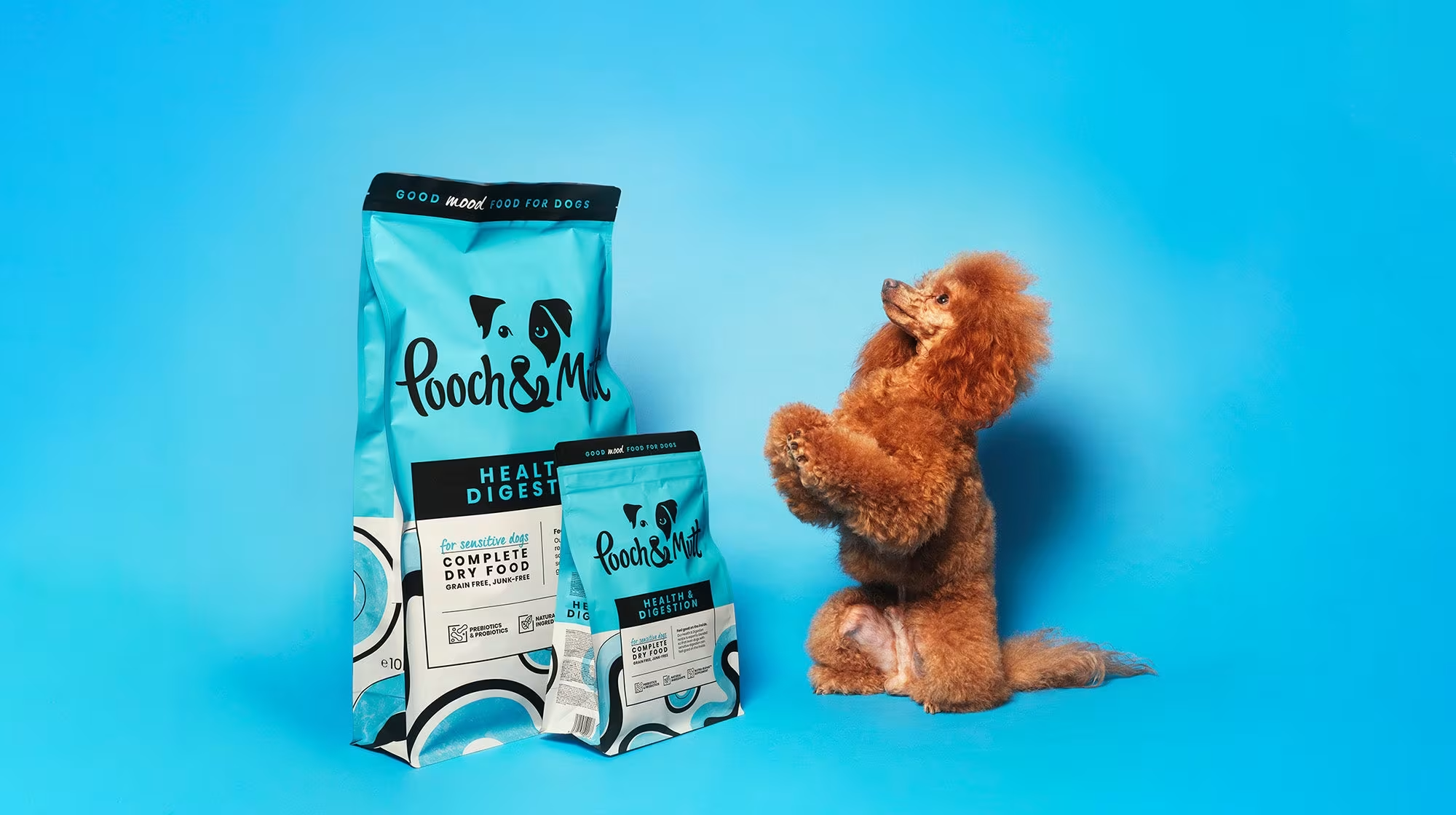
If your dog does have a sensitive stomach and you feel a change in food is worth a try, we recommend feeding balanced and nutritious dog food such as sensitive stomach dog food. All products within this range are carefully selected to be easier on your dog's gut.
Sensitive Stomachs
-

 from
fromCurrent price: £1.99
Health & Digestion Complete Wet Dog Food -

 from
fromCurrent price: £8.49
Health & Digestion Dry Dog Food -

 from
fromCurrent price: £2.49
Fish, Potato & Pea Wet Dog Food -

 from
fromCurrent price: £3.99
Health & Digestion Postbiotic Fish Treats -

 from
fromCurrent price: £64.99
The Health & Digestion Bundle -

 from
fromCurrent price: £5.99
Health & Digestion Bone Broth For Dogs -

 from
fromCurrent price: £3.99
Dental Postbiotic Meaty Treats -

 from
fromCurrent price: £3.99
Cheddar Cheese Postbiotic Treats -

 from
fromCurrent price: £19.99
Gastrointestinal Dry Dog Food
This post was originally published in June 2025, but has been updated for comprehensiveness.


Hi @Joanne, I would advise to speak to a professional about advice here as it sounds like your pooch may need a dog trainer or behaviourist.
My dog absolutely loves grass she is only 8 months old, she especially loves it when they’ve just cut the green opposite and it’s all stacked up in piles she is only a little frenchie but she will eat her body weight in it every day, she especially loves when they’ve hit the ground underneath and it’s got mud attached so she can run around with big chunks as a game before scoffing it, I really think they just like the taste just like we like the smell of freshly cut grass, she never has a bad stomach or is sick after or before it she just loves eating it, I often see her pulling at the thick stalky bits that spring up too I think she has a sweet tooth, I know the mud eating is for extra minerals all the dogs in my block when it’s really hot start digging and grabbing chunks of clay ish mud out to eat so maybe grass is a mineral top up also abut like a salad for us or multi vitamins :)
Hi Thomas, thanks for your comment it made me smile :) Of course, some dogs do just like the taste and it clearly makes her happy playing in it!
Hi, l have recently changed both my cockapoos on to health & digestion, initially just our pup - at 8 months, as his poop would often start of well & then go loosish (he was on JWB puppy) then our 3 year old for ease of both dogs on the same food & because she seemed to be bored of her grub ( she was on JWB adult) …. We are 6 & 3 weeks in of being purely on the P&M & both seem to be eating a lot more clumps of cut grass & pups poo hasn’t improved much, may even have got worse, 3 year old who also had great poop b4 has went softer. We weaned both over a 2 week period with no issues so confused why they they are both wanting to eat the cut grass & sloppier? They both get an additional probiotic daily too so not sure what else to do? Both dogs eat their grub with gusto & for our fussy 3 year old dog that’s a rarity, so disappointed it’s not helping the poop! 🙈
Hi Stacey Brown! I wouldn't be too worried about the grass, as the article says, sometimes they just like the taste! It's quite often the case that poodle breeds have stomach issues though if they're having toilet problems too. My dog is the same! However their poo shouldn't be overly soft. It could be they have certain intolerances that you're not aware about yet. I would see a vet for further advice who can run tests and see what the issue may be. Health & digestion does well for many dogs with sensitive stomachs but if not having a positive outcome for you, there may be something bigger at play so it's just a case of working with your vet to eliminate other problems. Hope that helps!
Hi I have a 2 yr old staffy she has to have her anal glands emptyed really often, at the moment we are on burns kibble ,I tried her on the fish flavour it really upset her stomach, lamb seems to suit her what would you suggest if we change to pooch and mutt?
My 3 year old cocker is eating grass and bringing up his food. He's been on pooch and mutt digestion for nearly a year now and loves it. Can't understand why he is doing it as it's making him sick!
I’m really concerned we have a new puppy he’s having his second jabs on Wednesday but every time he goes in the garden he eats chunks of grass. I think he thought it was a game at first but he eats so much.
Hi Heather, We can completely understand how concerning this can be, the article does mention that some dogs do this because they enjoy the taste, but it's certainly worth mentioning to your vet at their appointment if you are worried to put your mind at ease :)