


Key Takeaways:
- When fed a Raw food diet, you may find your dog poops less frequently, and they may appear smaller, firmer, with a milder smell. They also may vary in colour.
- Your dog’s poop may also change when transitioning to Raw food. Their poop may be slightly wet and runny, even when you’ve switched them over gradually. This should be temporary as their digestive system adjusts to their new food, and should balance out over time.
- If their runny poops persist and are accompanied by other symptoms like vomiting, weight loss, a loss of appetite, and lethargy, be sure to check in with your vet.
Your dog’s poop. Something that, until you were a dog parent, you didn’t imagine would take up 95% of your conversation (and sometimes your camera roll).
But, as doting dog parents - that’s just the way it is! Especially when it’s key in keeping an eye on their health, and how well they’re taking to their diet.
Raw food is a relatively new way of feeding - one that’s continuing to grow in popularity due to the heap of benefits it can bring. But what goes in must come out, and introducing a new diet (whatever that may be) can also bring different poops. So how do you know what’s normal, and what requires re-evaluating their diet, or even a trip to the vet?
Here we’ll explore what you can expect from your dog’s poop when feeding a Raw diet, including how their poop may change, and when to check in with your vet.
What can I expect from my dog’s poop when switching to Raw?
When switching to any new diet, your dog’s likely to experience some immediate changes to their poo, especially as their gut adjusts to their new food.
Transitioning to a new diet gradually over time helps avoid any major digestive upset - but sometimes it just can’t be helped. Especially if your dog has a particularly sensitive tum.
During their transition to Raw, your dog may experience:
Slightly softer poops
Poops that are darker in colour
Poops that change colour daily
This should only be during the transition period, and once they’re fully adjusted to their Raw diet, their poops should normalise and be consistent in size, consistency, and colour.
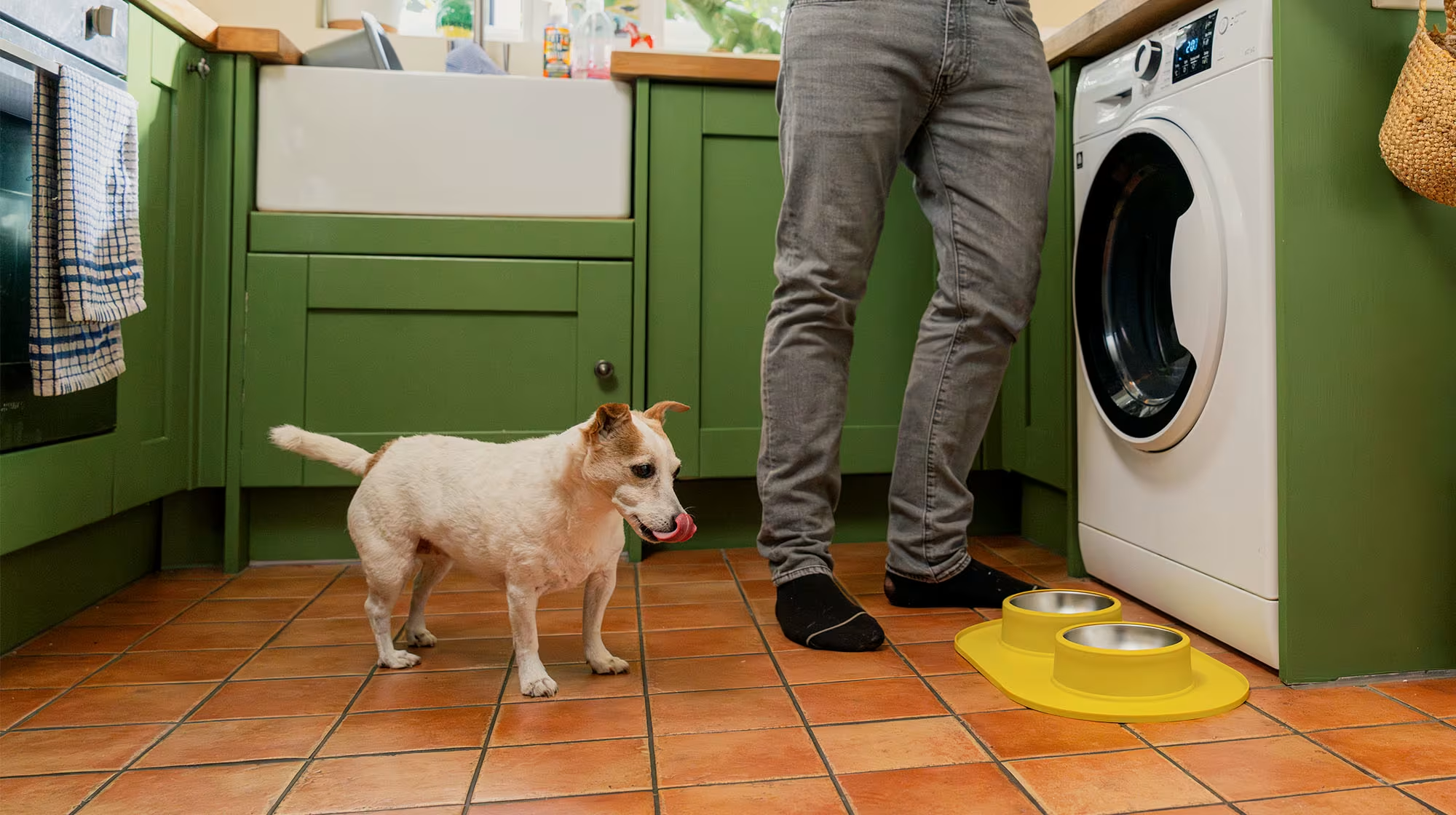
How long does it take for their poop to normalise?
Most dogs’ poops will balance out within 1-2 weeks of their new diet. But, as we know, every dog’s different, and some may take longer or less time than others to fully adjust.
However, if your dog’s poops remain super soft and runny after 2 weeks and you see no signs of improvement, you may need to re-evaluate your transition process. Potentially extending the transition beyond the recommended time until their poops become more consistent.
If their business shows absolutely no sign of getting better, be sure to contact your vet. It may be that a Raw diet isn’t for them, or that they have an allergy to one of the new ingredients. Your vet can help you with the best next steps.
Raw-fed dog poop chart: What to expect
One of the many things owners love about feeding their dog a Raw diet is what it can do for their poops!
When feeding Raw for the first time, the changes may come across as a little alarming. But don’t worry - they’re completely normal and are a result of simple, high-protein recipes.
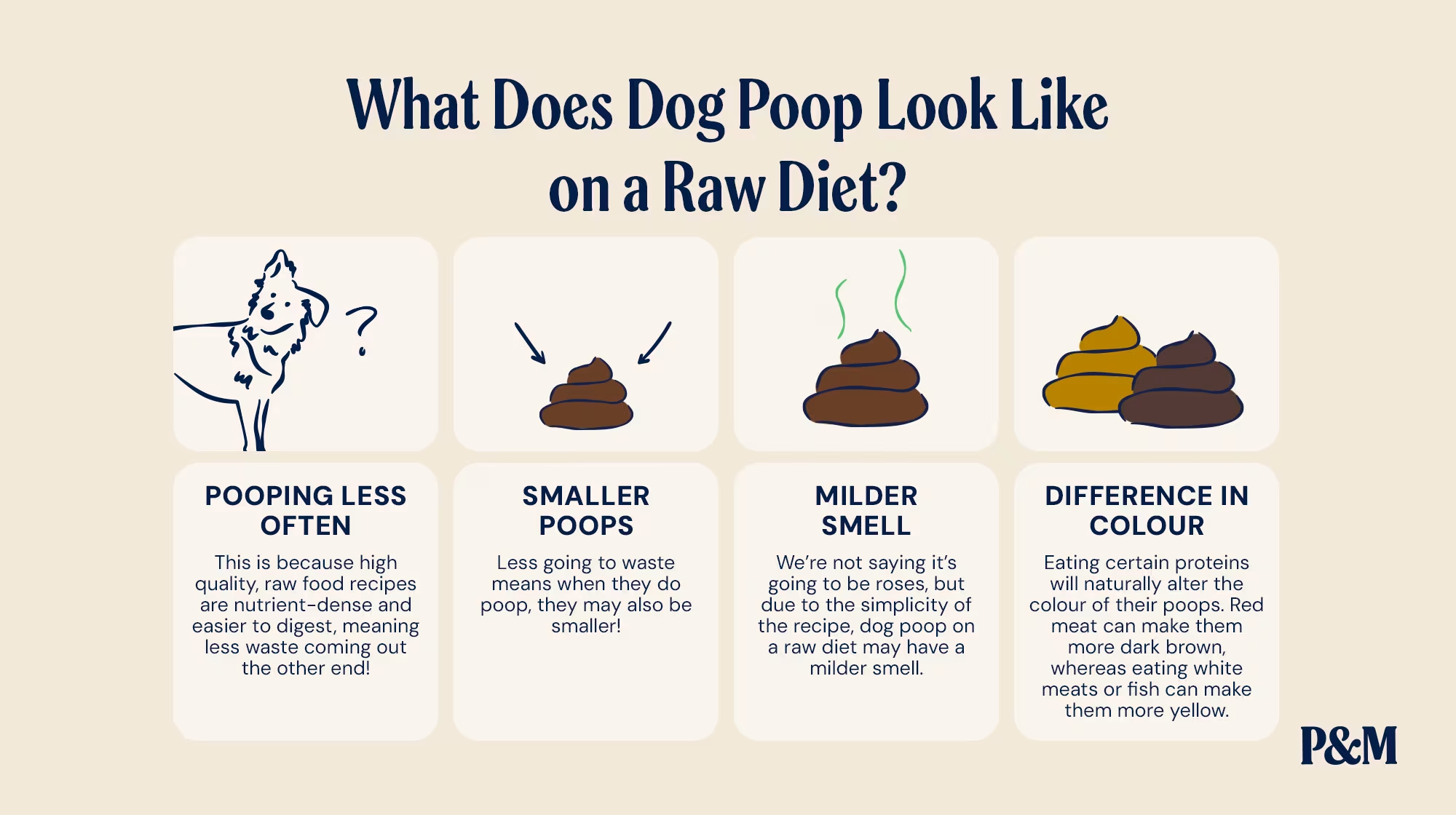
Dogs who are fed a Raw diet often have poops that are:
Less frequent
Smaller
Milder in smell
Darker or lighter in colour, depending on the main protein they eat
Why do dogs poop less often on a Raw food diet?
Many dog owners who feed Raw find that their dogs don’t poop very often - averaging at 1-2 times a day, or once every 2 days.
This is due to the highly digestible, nutrient-dense recipes that make up Raw dog food diets, and how quickly their gut can absorb all that goodness.
Your dog’s poop is typically all the ‘waste’ from their diet. The more junk, nasties, and artificial additives that are in dog food, the bigger the poo.
That’s because there’s not much goodness for the body to absorb.
The more readily available goodness, the more the body can soak up, making less waste! So, naturally, your dog has to ‘go’ less often.
Why do dogs have smaller poops on a Raw food diet?
Dogs tend to have smaller poops on a Raw diet for the same reason they poop less often!
With Raw recipes being much simpler, their bodies don’t create much waste after absorbing all the useful nutrients. So, when they do have to go, it’s usually quite small (big win for the one holding the poo bag!).
You may find that their poops are also firmer, making them easier to pick up. However, if they’re too firm and your pooch seems to be struggling to get them out (aka constipation), then it’s best to check in with your vet.
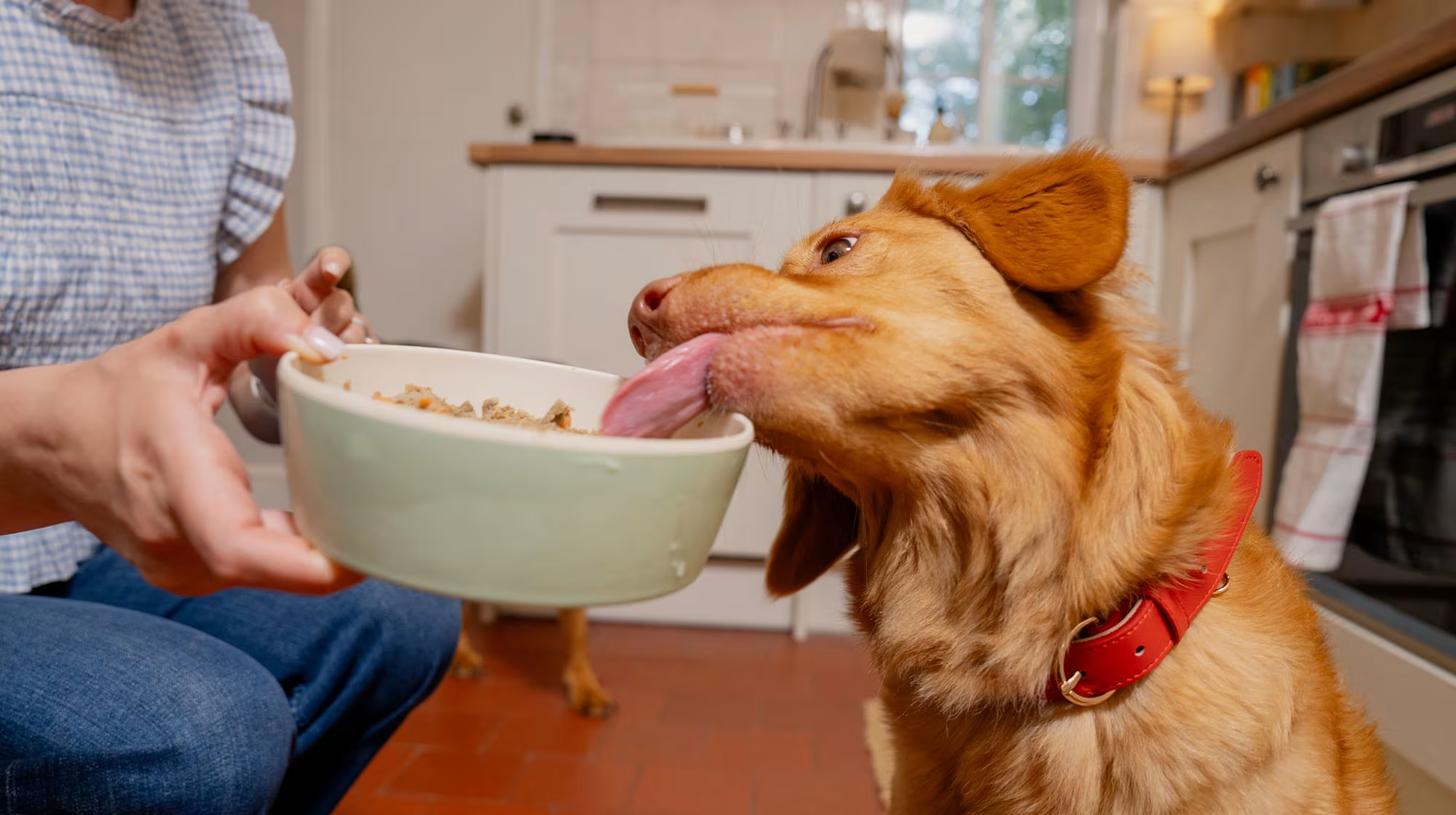
Will my dog’s poop smell better on a Raw food diet?
Well, let’s just say - it’s never going to smell like roses, whatever they eat. But it’s known that dogs on a Raw diet experience milder-smelling poos. This is because less waste (thanks to the simple, nutrient-rich recipes) means less food is left to ferment in the gut (which is usually the culprit behind particularly stinky poops).
What colour is a healthy dog poop on a Raw food diet?
When feeding your dog a Raw diet, their ‘normal’ colour can change depending on the protein they eat.
Red meats in Raw food (like Beef), can make their poops darker brown, while white meats or fish, like Chicken, Turkey, or White Fish & Salmon can make them lighter and more yellow or beige.
So when it comes to what’s healthy, it all depends on the dog and the main ingredients in their Raw food.
What’s the difference between Raw dog food and other dog food?
The main difference between Raw dog food and other types of dog food, like Fresh, Wet, and Dry, is the way that it’s prepared and stored.
Unlike other dog foods, Raw dog food is exactly that - raw! There’s no cooking involved in the recipe, like there is in Fresh, Wet, or Dry food.
Raw dog food’s also delivered and stored frozen. This is to lock in all that goodness while practising good hygiene. Even though Fresh dog food can also be frozen, it contains nothing Raw.
What does unhealthy dog poop look like?
No matter your dog’s diet, there are universal signs to look out for in your dog’s poop that indicate things aren’t quite right.
Signs of unhealthy poop include:
Runny consistency or diarrhoea that doesn’t go away
Extremely hard and pebble-like
Covered in mucus or jelly
White flecks (that could be a sign of parasites)
Unusual colours like green, grey, or black, or looking greasy
Presence of blood
When to see a vet
Many abnormal poops tend to go back to business as usual in a few days, but if they persist, even with a change of diet, it’s time to see a vet.
Especially with symptoms like:
Blood in their stool
Diarrhoea
Vomiting
Reduced appetite or not eating at all
Rapid weight loss
Lethargy
FAQs
Is it normal for Raw-fed dogs to poop less?
Yes, totally normal! Dogs who are fed a Raw food diet tend to have smaller, firmer, and less frequent poops. This is because with such a simple, bioavailable recipe, their body can easily absorb all the goodness that comes with it, and there’s less waste to come out the other end. If their poops are too firm and they’re struggling to push, they could be constipated. In this case, it’d be good to check in with your vet.
Is diarrhoea normal when switching to Raw food?
A little bit of digestive upset is expected when switching to any new food, even if you do so gradually, bit by bit. As they adjust to their new food, their poops should go back to normal. This can take anywhere from a few days up to a few weeks. However, if their diarrhoea persists, and other symptoms begin to develop like vomiting, weight loss, and blood in their stools, be sure to get them to a vet. It might be that you need to reassess their diet.
Is Raw dog food right for my dog?
The best way to know if Raw is right for your dog is to weigh up the benefits it brings, and align them with your dog’s breed & needs. Raw dog food diets are often chosen for dogs who are high-energy, large working breeds, or who struggle with sensitivity, but can be a great complete and balanced diet for any dog.


