


Key Takeaways:
- Dog anal glands are small sacs; about the size of a cherry, that sit inside the anus. The sacs are lined with sebaceous glands and they produce a strong, foul-smelling liquid.
- Blocked fluid, an unbalanced microbiome, infections, a ruptured abscess, allergic skin disease, and cancer can all lead to issues with your dog's anal glands.
- Dogs will drag their bum on the floor, sit down abruptly or refuse to sit, chase their tail and lick or chew at their back end, rump, or legs if their anal glands are full.
- Signs of full anal glands in dogs also include a strong, fishy or foul smell from their rear and swelling, redness, or a visible lump around the anus.
- A vet can confirm if your dog's anal glands are full and express them, especially if you're not confident to do it yourself.
For some individual pets, anal glands can become problematic and owners must be aware of what they are and what can go wrong with them.
Anal Glands: What you need to know
What are anal glands in dogs?
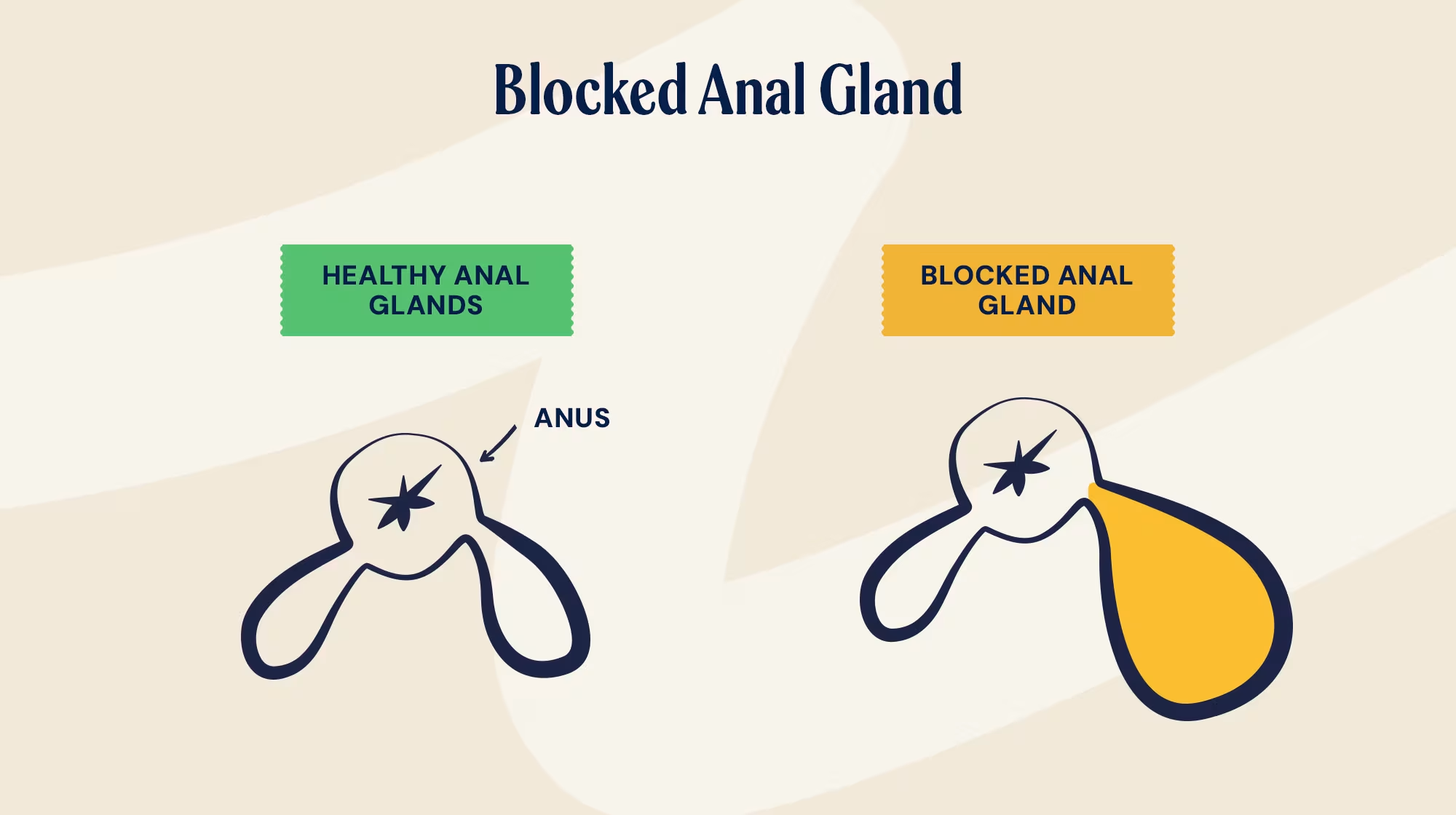
Dog anal glands are small sacs; about the size of a cherry, that sit inside the anus. If we were to say the anus was a clock face, the glands are found at about 4 and 8 o’clock.
The sacs are lined with sebaceous glands and they produce a strong, foul-smelling liquid that dogs use to mark territory and communicate with other dogs in the vicinity.
Anal glands cannot be seen externally and can only be felt by inserting fingers into the anus. This is done with a gloved hand, using lubricant to minimise discomfort.
What causes anal gland problems in dogs
Blockages
Sometimes, the fluid inside the gland is not expressed and it builds up, causing a blockage.
Unbalanced gut microbiome or dysbiosis
The health of your dog's gut, and gut microbiome impacts most parts of your dog's body, including those that affect their anal glands. An imbalance of bacteria in the gut, or dysbiosis, often leads to variable stool consistency. Passing stools often helps dogs naturally express their anal glands, but with softer, more runny poos, they miss out on this opportunity. Plus, an increase in less friendly bacteria from the gut can also lead to inflammation. To find out what's really going on inside your dog's gut and how it may be impacting their overall health and wellbeing, a Gut Health Test is the way to go. Find out more about how to investigate your dog's gut health here!


Gut Health Test
Get your results in 4 weeks, with our quick and easy, at-home Gut Health Test for dogs. One simple poo sample, analysed by our microbiologists, and you’ll get personalised recommendations to help your dog thrive.
*Discount codes can't be redeemed on this item.
-
91% of customers saw improved gut health
-
Science backed gut health insights
-
Online report including key health indicators
Original price: £69.99
Current price: £34.99
Infections
The gland can become infected, leading to discomfort, an elevated temperature and swelling of the gland.
Ruptured abscesses
An advanced infection can cause the gland to swell with pus and to then ulcerate onto the skin. The owner will see a small hole in the skin that is oozing blood and pus.
Cancer
An adenocarcinoma is the most common type of tumour to affect the anal sac. These tumours frequently cause elevated calcium levels and signs such as excess thirst and weakness.
How to tell if your dog’s anal glands are full
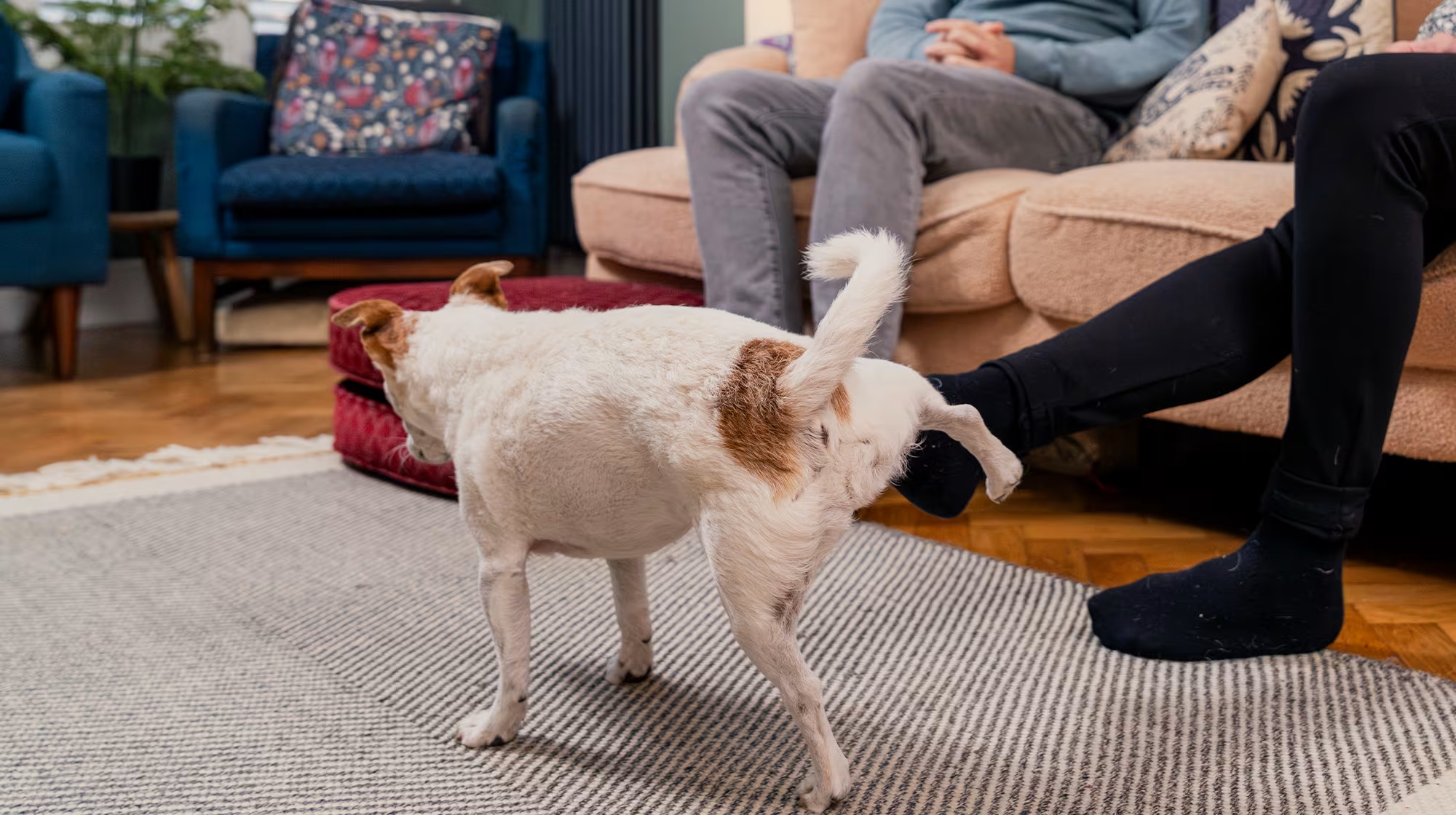
One of the most common signs of full anal glands in dogs is scooting, dragging or rubbing their bottom on the floor to relieve irritation. Many owners mistake this for worms, but it’s usually a sign of anal discomfort.
Other clear signs to watch for include:
Behavioural signs:
Scooting or dragging their bum on the floor.
Sitting down abruptly or refusing to sit.
Suddenly turning to look at their rear or chasing their tail.
Straining or showing pain when passing stools.
Licking or chewing at their back end, rump, or legs.
Physical signs:
A strong, fishy or foul smell from their rear.
Swelling, redness, or a visible lump around the anus.
Brown, grey, greenish-yellow, or blood-tinged discharge from the anal area.
Fur loss or red skin around the rump from persistent licking or chewing.
If left untreated, full anal glands can cause infections, abscesses, or even rupture. This can be extremely painful, so always speak to your vet rather than trying to express them yourself - unless you have been trained to do so.
Are any breeds at increased risk?
We see anal gland issues much more commonly in small breeds, due to their conformation. They seem to be more prone to narrow openings of the anal glands. Obese dogs are also at higher risk. This is thought to be due to them having weaker muscles.
It is relatively uncommon for larger breeds to suffer with chronic anal gland issues, but it certainly happens.
Pedigree dogs are at highest risk. This is likely due to the fact that atopic dermatitis (allergies) is more common in these dogs and anal gland issues go hand in hand with atopy.
Do puppies need their glands expressed?
Just like older dogs, a puppy’s anal gland shouldn’t cause them any pain, discomfort or distress unless they need emptying. If your puppy’s suffering from full anal glands, they may display the same symptoms as older dogs including scooting, licking the area, straining when pooping or a strong, fishy odour.
However, you should also note that these are also symptoms of food allergies or worms since puppies very commonly contract worms.
If you suspect your puppy has worms, be sure to check their poop for any white flecks or spaghetti-like worms, and speak to your vet for worming treatment and advice. To find out more about treating your puppy for worms, check out our article; ‘Identifying and treating worms in puppies’.
If you suspect that your puppy needs their anal glands expressed, be sure to contact your vet. You could follow the aforementioned advice to do it yourself at home, but with a puppy being so small and wriggly, taking them to a vet will be easier and ensure a safe procedure.
How to express dog anal glands
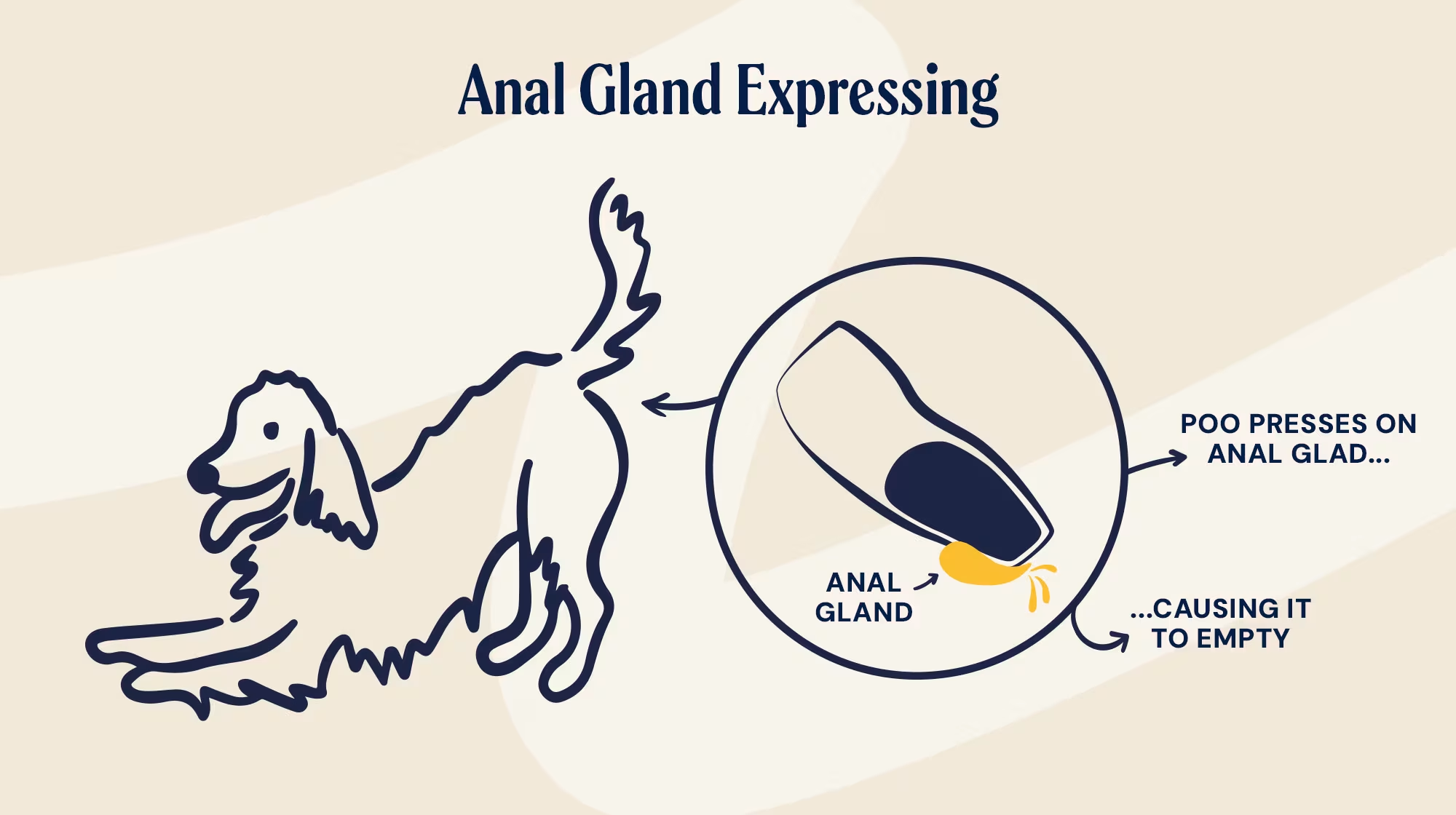
Anal glands will need to be squeezed and emptied if they are impacted. This is something owners can be taught to safely do at home. We should only empty glands that require emptying; if the dog has no anal gland issues, there is no need to empty them.
When emptying glands at home, prepare yourself before getting your dog. Make sure you have disposable gloves, paper towel and some lubricant such as KY jelly or Vaseline.
The easiest place to empty glands is in the bath! Ideally you would have one person holding the dogs shoulders forward and praising them. They can also reward them with high value treats las they stay calm.
If you imagine the anus is a clock face, each gland is located at 4 and 8 o'clock. Gently insert your thumb into the anus, steadying the anal gland with your pointer finger, which will be on the outside of the anus.
Squeeze with firm pressure, releasing all of the contents onto a tissue. You will feel the gland shrinking from the size of a grape to a small 'empty balloon'.
As this can be a strange sensation, your dog may try to run or jump, so ensure they are being held firmly.
Reward your dog. You are done!
Many owners are (understandably) not confident to empty the glands at home and this is always something a vet will be happy to do. Some dogs require their glands to be emptied very regularly (every 4 to 6 weeks), while others may only need it a few times in their life.
If there is an infection, the dog will need a course of antibiotics and anti inflammatories.
A dog who is licking at their back end due to the discomfort should be given a buster collar to protect the surrounding skin and tissue.
Uncommonly, surgery is needed to treat ongoing anal gland issues, particularly if they cannot be managed medically and are significantly affecting a dog’s quality of life.
How can you prevent dog anal gland issues?
Thankfully, there are lots of things we can do to help prevent anal gland issues. This includes:
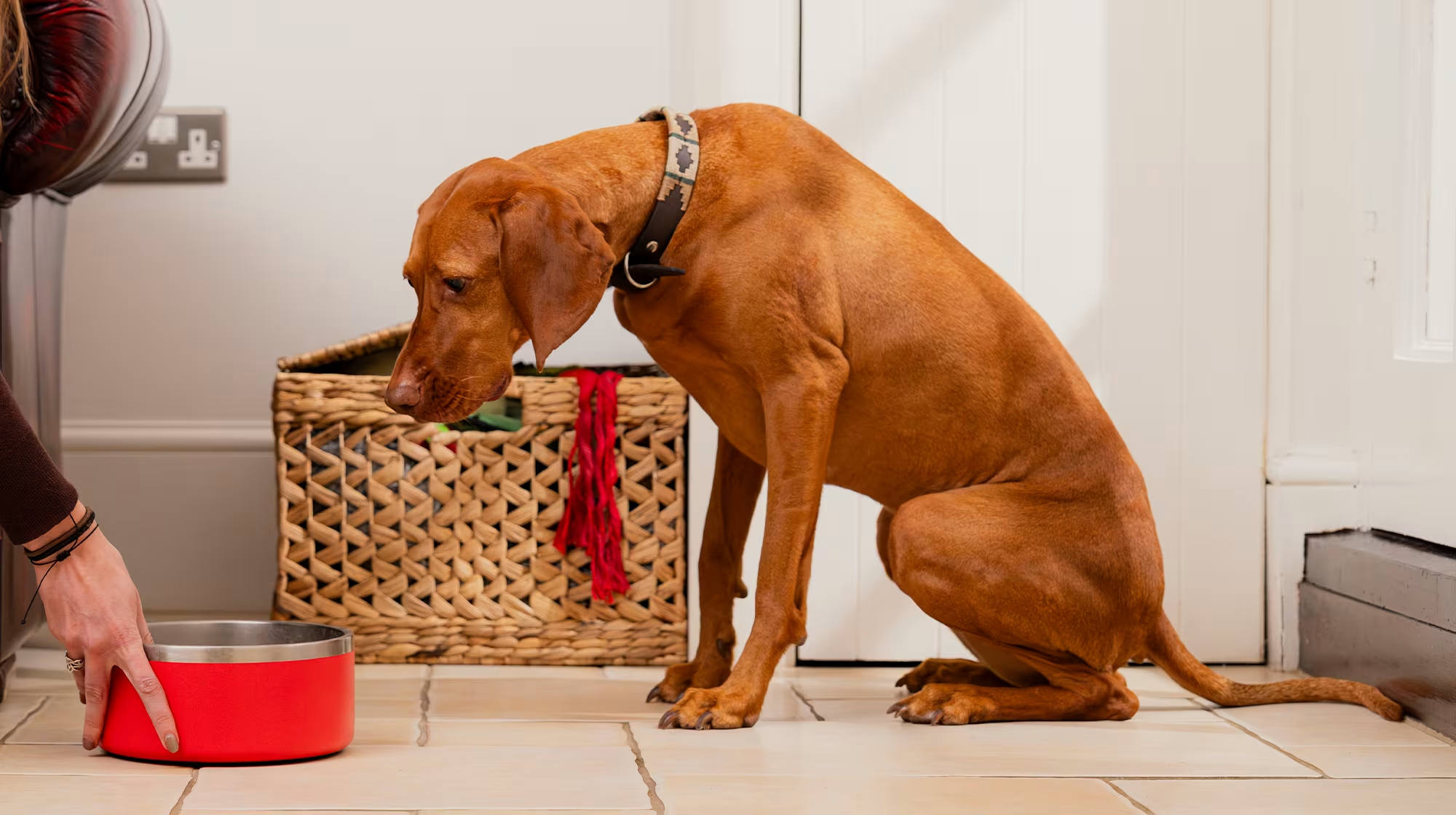
Feeding a high quality diet with ample fibre and supplementing the diet with fibre if needed. This helps keep the stool solid, ensuring the glands are naturally expressed when the dog passes stool.
Providing ample exercise. Not only will this prevent a dog becoming over-weight, exercise aids in gut health and helps promote healthy bowel movements.
Preventing obesity. Consider a slimming diet such as Pooch & Mutt’s Slim & Slender if your dog is over weight. This high fibre weight loss diet helps stave off hunger and can speed up weight loss.
Schedule regular check ups. You can ask your vet to check your dog’s glands during their routine checks and you may also need to book them in for regular ‘anal gland checks’.
FAQs
How do you know if your dog needs their anal glands expressed?
Your dog will usually let you know something is amiss by scooting their bum along the ground and stopping abruptly to look quickly at their back end. They may also lick or chew obsessively at their back end.
What happens when a dog’s anal glands are full?
Full anal glands cause discomfort and can quickly become infected, leading to an abscess forming. If not treated on time, the abscess can burst out onto the skin.
How often should you express dogs’ anal glands?
Most dogs never need their glands expressed. The fluid is released naturally when they pass stool. However, some dogs will need their glands emptied for them. This can be an infrequent occurrence (once or twice a year) or something that is done every 4-6 weeks. It all depends on the individual.
This post was originally published in July 2022, but has been updated for comprehensiveness.


Which Pooch & Mutt food is best suited for a dog with anal gland issues - are they all high fibre? Thank you
Hi Sarah, We would advise ensuring they are on a high fibre diet such as our Health & Digestion dry food, which contributes to firm stools and the natural expression of anal glands. :) If you would like to discuss this further, please do reach out to the team on pooch@poochandmutt.com
Hi The fishy smell that often comes from my 4.5 year old Cockapoo is undoubtedly her anal glands as I think she expresses them now and then herself but regrettably more so recently. I do take her to the vet every couple of months to have them expressed and more often than not they inform me there is hardly anything in them. I’ve always used P&M kibble e.g. health and digestion, calm and relaxed and in earlier years slim and slender. As she will not eat kibble on its own and I thought it was perhaps the larger size kibble that put her off, I recently changed her to Primal, the much smaller size kibble, albeit still having to tempt her with some other wet incentive on top. However, her poos just very recently have been much smaller, sometimes looser, than normal and was wondering if the change of food is perhaps contributing to that and consequently the increase the anal issues. Is it possible that Primal is perhaps not the best choice for her given her anal issues and maybe more protein in it than fibre which she maybe needs. Any advice would be appreciated.
Hi my dog suffering with anal glans took her to the vets 2 weeks ago said she needs to be flushed but still got problems vets don't want to know
Hi Lorraine, If your pooches stools are seeming loose, this could mean she has a slight intolerance to an ingredient or that the food may be a little rich for her. She could indeed also require more fibre to bulk up her stools, and our Health & Digestion range may be more suitable. You could also look at our Bionic Biotic supplement which could also be beneficial if your pooch has no intolerance to grains. Please do reach out to the team at pooch@poochandmutt.com for further advice and they will be more than happy to help :)
Hi Irene, Oh we're sorry to hear this and do hope she is doing ok! It may be that your pooch would benefit from some additional fibre in their diet, Our Health & Digestion dry food can be a good choice here as it supports a healthy gut, firm stools and the natural expression of anal glands. Please do reach out to the team at pooch@poochandmutt.com for any further advice and guidance :)
Isit common for a dog to have diaharrea after an anal expression?
Hi Gail, This is not something that is usually common, however dogs may experience diarrhoea if stressed when travelling, or at the vets. This can also occur with a diet change, or if new supplements were started. Do always reach out to your vet for further guidance if you are at all concerned :)
Hi my dog has been having issues with her anal glands and has had to have them expressed a couple of times now , and her poo's are always quite soft I am lead to believe this could mean she doesn't get enough fibre in her diet hence the soft poo's you have come highly recommended by multiple people for many different reasons , I'm wondering if u can advise me on which of your foods would give my 16 month old girl the fibre she needs to help with her anal gland issues and her soft poos , I look forward to hearing from you
Hi Therese, We're sorry to hear this! Soft stools can be for many reasons, and what is most suitable may depend on the cause. Our Health & Digestion range is however a great choice for those with sensitive tummies and that may need additional fibre to help with firmer stools. If you would like any further specific advice or guidance please do reach out to the team at pooch@poochandmutt.com :)