


Key Takeaways:
- A recent study by Dr Bushra Abu-Helil, Head of Microbiology at Pooch & Mutt found that dogs who sleep with their owners commonly have poorer gut health than those that don't.
- Whilst letting your dog sleep with you isn't dangerous, it could mean that their gut isn't properly equipped to bounce back from illness, or fight common symptoms such as digestive issues, itchy skin, or excessive paw licking and grass eating.
- If your dog does sleep with you, it's worth investigating their gut health, and how you can help to naturally improve it (thus improving their overall health and wellness).
If you’re a dog owner who happily lets your pooch snuggle into bed with you, you’re certainly not alone!
According to Pooch & Mutt’s recent survey of 2,000 UK dog owners, over half of us (64%) open up the duvet to our dogs when it comes to bedtime.
But what if we told you that by doing so, you could be dampening their chances to reach optimal health and wellbeing?
You may be looking over at your sleeping pooch and thinking, “Well, they look pretty happy to me”.
But we’re talking about what’s going on on the INSIDE (which could, without intervention, become prevalent on the outside too).
Yup, we’re talking about their gut health, and the other areas of their body it can affect.
Whilst we need their gut to be in tip-top shape, its delicate balance of bacteria can be impacted by all corners of life. From where they live, to who they live with, and according to new data collected by our head of microbiology, Dr Bushra Abu-Helil - if they share a bed with you.
Read on to explore what Dr Bushra’s research found, as well as her top tips on how to help naturally boost your dog’s gut health and their microbiome.
Our findings
Research from Pooch & Mutt suggests that dogs who sleep in their owners' bed tend to have more signs of bad gut health than those that don’t
Here at Pooch, we have our finger securely on the pulse of all things dog gut health.
Through around-the-clock research from our resident microbiologist, Dr Bushra Abu-Helil, we’ve gained in-depth insight into how your dog’s gut works and what external factors can knock its delicate balance.
The health of your dog’s gut primarily comes down to their microbial health. In other words, the delicate balance of bacteria that live within your dog’s gut, as well as their resilience and ability to help your dog’s body function as it should.
That can be anything from helping them fight infection and illness, aiding digestion, reducing itching, or supporting their behaviour.
Amongst Dr Bushra’s study of more than 2,600 dogs’ gut health, she found evidence to suggest that dogs who sleep in their own bed tend to show indications of better gut health and stability than those that regularly sleep in their owner’s bed.
Meaning, dogs who sleep in their own bed show a better balance of bacteria in their gut, and are more equipped to support their body and combat pesky symptoms.
Dr Bushra said:
“Co-sleeping with dogs is increasingly common and often comes from a place of affection, but our testing indicates it may be linked with broader routines that affect gut health.”
“Dogs with their own sleeping space tended to show better overall gut health indicators.”
“That doesn’t mean sleeping in the owner’s bed is harmful on its own, but it does show how everyday lifestyle habits can influence the gut.”
“Gut health is shaped by a range of factors, including routine, stress, diet, exercise and environment, and sleeping environments may form part of that wider picture.”
Should you let your dog sleep in your bed?
It’s completely up to you!
There’s definitely no right or wrong answer here, and at the end of the day, it’s whatever you deem best for your pooch.
But it’s understandable if this new research has you rethinking your bedtime routine.
Whilst sleeping in the same bed with your dog isn't immediately dangerous or harmful, it might mean that your dog doesn’t have the best foundation for a healthy, balanced gut. Meaning they’re not fully equipped to support their long-term overall health and wellbeing.
So what might this mean for your dog in the long run?
Well, if they’re already suffering from pesky symptoms like:
Constant paw licking
Their gut might not be in the right shape to help them on their way to recovery.

Why might sleeping in the same bed impact your dog's gut health?
When delving into her research, Dr Bushra found that the majority of dogs who had symptoms directly linked to an unbalanced gut (dysbiosis), also happened to sleep in the same bed as their owner.
And this correlation could be down to a number of factors:
Stress & anxiety have a huge impact on our dogs' gut (otherwise known as the gut-brain axis). Sleeping in their own bed, surrounded by familiarity and smells they're accustomed to, can help reduce stress and make for a peaceful sleep.
A good night’s sleep is crucial in helping your dog ensure a healthy, balanced gut microbiome. As we already know, quality, uninterrupted sleep in their own bed can support the gut-brain axis, helping to reduce stress. But it also allows ample time for restoration within the body that can then support healthy digestion, immunity, and overall wellbeing.
When you allow your dog to sleep with you in your own bed, you're sharing more than just space. You’re sharing bacteria, too! The longer you share proximity with your dog, the more our microbiomes begin to look very similar, thanks to the mutual transfer of bacteria. This doesn’t have to be a bad thing, as not all bacteria are harmful. However, it can encourage microbial imbalance in the gut, AND even spread poor gut health indicators that you suffer with to your dog.
It’s true!
Take this, for example:
‘Antibiotic resistance’ (where the bacteria in our gut adapt to antibiotics, so they can no longer fight off harmful bacteria) can actually spread to our dogs.
This means that if your dog were to need a course of antibiotics in the future, they might not be able to help them successfully fight infection.
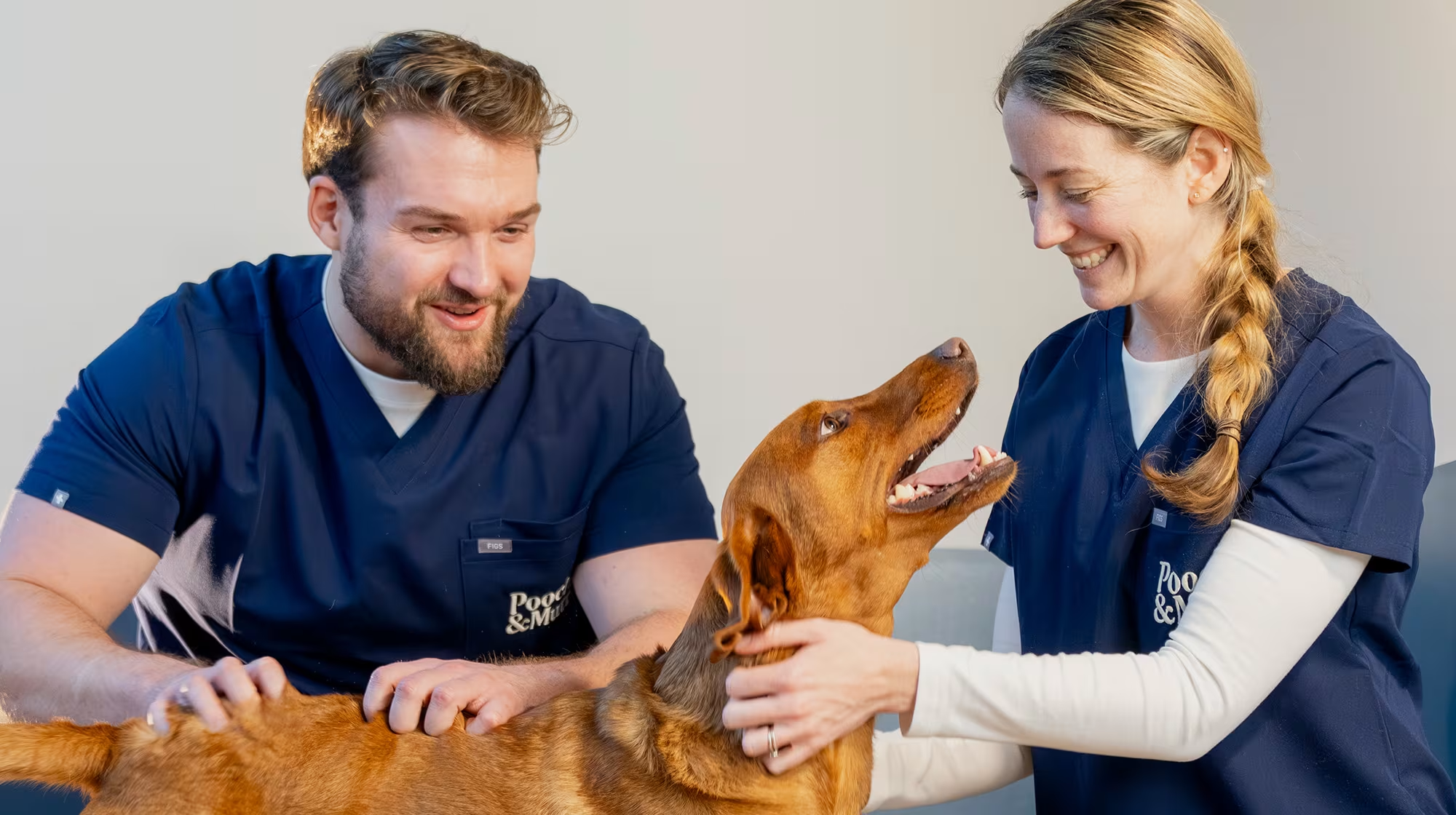
How does your dog’s gut impact their overall health?
The ecosystem of bacteria that lives in their digestive tract, or their gut microbiome, plays a major role in overall health and wellbeing.
A rich and balanced microbiome can support immune health, skin and coat condition, behaviour and brain function, while an imbalance can contribute to a wide range of common issues.
Dr Bushra says:
“In many dogs, the signs can show up in ways owners wouldn’t automatically connect to the gut, such as skin itching and allergies, anxiety, paw licking, bad breath, anal gland issues and even things like excessive grass eating.”
“That’s why it’s so important for owners to think about gut health as part of their dog’s overall wellbeing, rather than just something to consider when there’s an upset stomach.”
Dr. Bushra explains: How to improve your dog’s gut health naturally
Who better to advise on ways you can naturally help improve your dog’s gut health than Dr Bushra herself?
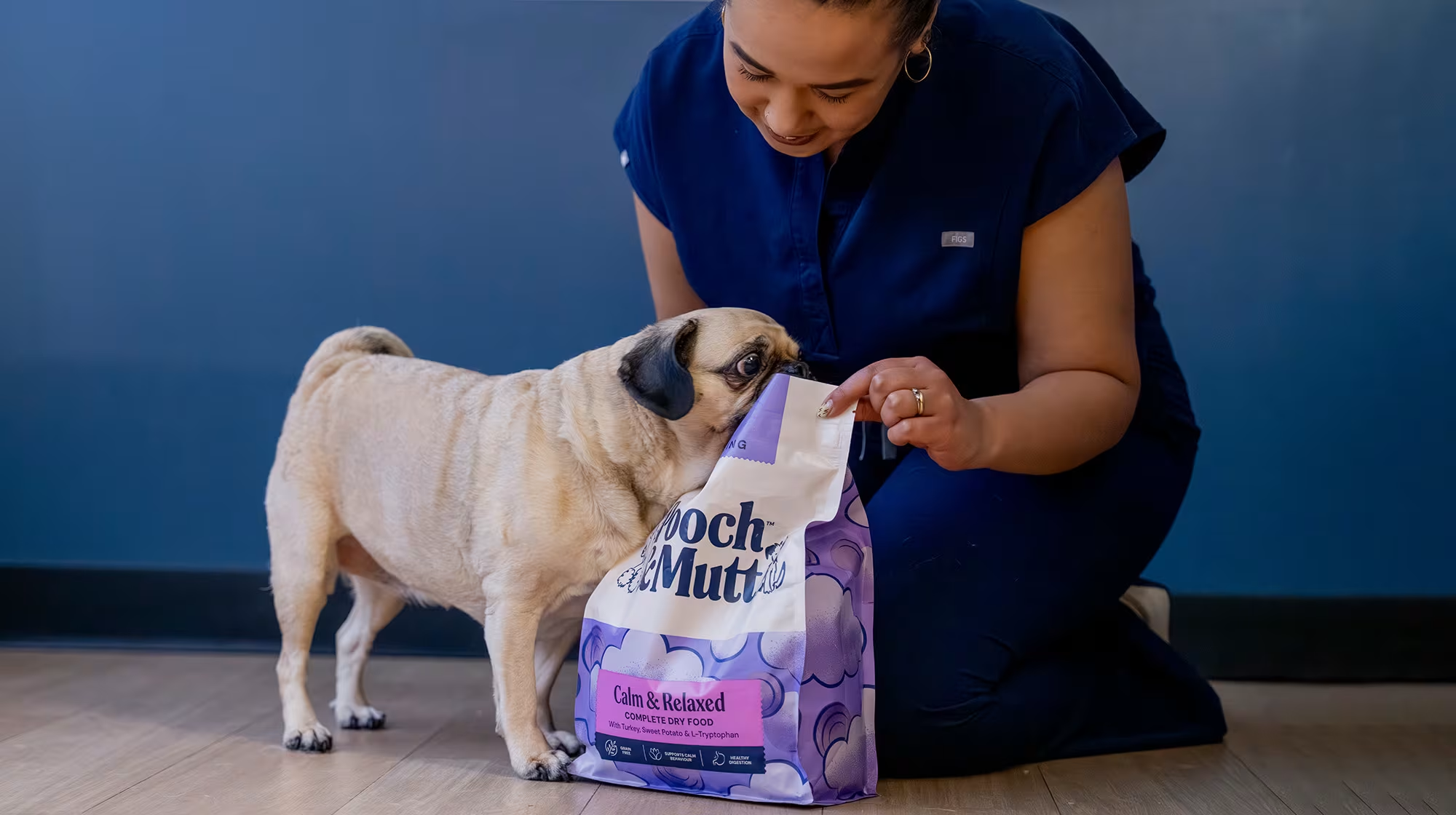
Her top tips on naturally improving your dog’s gut health include:
Finding a good quality diet that suits your dog and avoids unnecessary diet changes. This includes taking into account any allergies and concentrating on filling their diet with natural and healthy ingredients.
Keeping daily routines as consistent as possible. Whether that’s sleeping in their crate, when and where they walk, and when they have their food.
Supporting the gut with prebiotics, probiotics, or postbiotics where appropriate. This can be done through introducing natural, gut health superfoods for dogs, like kefir, or targeted supplements.
Making sure your dog gets regular exercise and enrichment.
Looking out for subtle signs such as flatulence, bad breath, itchy skin, behaviour changes or messy poos.
The first step in your dog’s journey towards prime gut health, and overall top-notch health and wellbeing, is a Gut Health Test.
From a simple sample of their poop, scientists at our lab can look at the representation of bacteria living in their gut and assess their microbial balance.
This lets us know how ready your dog’s gut is to combat pesky symptoms, fight infection, and support other bodily functions on which their overall health and wellbeing rely.
We put all of their results into an easy-to-read Gut Health Report, along with a targeted supplement plan, to get your dog well on their way to feeling at the top of their game.
Find out more about our Gut Health Test and what it can tell you about your dog.


Gut Health Test
Get your results in 4 weeks*, with our quick and easy, at-home Gut Health Test for dogs. One simple poo sample, analysed by our microbiologists, and you’ll get personalised recommendations to help your dog thrive.
*Results delivered within 4 weeks of our lab receiving your sample.
Please note, discount codes can't be redeemed on this item.
-
91% of customers saw improved gut health
-
Science backed gut health insights
-
Online report including key health indicators
Original price: £69.99
Current price: £34.99
How to get your dog to sleep in their own bed
If you’ve been looking to get your dog back in their own bed, it’s no easy feat - but it certainly is possible through consistency, training, and positive reinforcement.
Things to consider when crate training, or bed training, are:
Don’t use the crate or bed as a place to go when they’re naughty. This creates a negative association, and they’ll struggle to relax or feel good in that space.
Consistency is key. If you decide to create this boundary with your dog, we need to try to stick to it! This includes preparing ourselves for potentially a lot of whining and a lot of instances of gentle parenting. But stay firm, stay calm, and they’ll eventually get the gist.
When establishing something new, try to stick to a routine. For example, if crate or bed training looks like them going to bed after trying for a pee or poop, try to do that every night at the same time. Soon they’ll recognise that after pee time comes bedtime!
Be sure to take off any collars or jumpers if they’re being put in a crate. This is just to ensure safety and to help avoid any negative experiences that would come from getting stuck.
Treat them! If your dog gets into their crate or bed on their own, or does so without whining, be sure to let them know they’ve done a good job. This can be through praise or a little bedtime treat.
FAQs
Are dogs happier when they sleep with you?
More often than not, your dog will be over the moon to sleep in your bed, and in some cases, can help increase your bond. So, if it’s what works for them (and for you), then go ahead! That said, it’s important to assess the long-term impact of letting your dog sleep with you on both their health and their behaviour. Pooch & Mutt’s research has found that sleeping in the same bed with your dog could lead to poor gut and microbial health, therefore leading to or worsening other symptoms. Especially those that directly link to the gut, like itchy skin, runny poos, smelly farts, and even stress & anxiety. You should also take into account your dog’s temperament and relationship with you. If your dog is prone to aggression, separation anxiety, and resource guarding, it might be best for you to establish some boundaries.
That said, every dog is different, and the right approach is always one that best aligns with their needs.
Are signs of poor health in dogs always down to their gut?
Not always. Where many of your dog’s symptoms can be put to their gut health, this should only be the first step in your investigation. Some common symptoms that can stem from poor gut health can also point towards other underlying health conditions.
Your dog’s gut is the epicentre of their body, as the bacteria that live within it are responsible for the support and function of many crucial bodily functions. This includes their metabolism, digestion, immunity, and even their ability to bounce back from illness.
If you or a vet has ruled out an imbalanced gut as the source of their issues, be sure to continue the investigation. If you’re ever worried about your dog’s new and consistent symptoms, always speak to your vet.
Does my dog need a gut health test?
If your dog’s showing constant issues with digestion, itchy skin, anxiety, runny poos, smelly farts, or bad breath, it might be a good idea to start with their gut. A Gut Health Test can identify areas of imbalance in their gut microbiome and assess how well-equipped their gut is to support their overall health. If, after a Gut Health Test and actioning recommended changes, your dog’s symptoms persist or worsen (i.e., blood in their stools, refusing to eat, lethargy, vomiting), then it’s best to see a vet as soon as possible.
What’s the best thing for a dog's gut health?
The easiest way to help perfect your dog’s gut health is through diet, supplements and gut health superfoods.
Natural, high-quality ingredients, as well as pre, pro, and postbiotics, can not only help reverse microbial imbalance, but help relieve pesky symptoms they just can’t seem to kick (like constant itching). However, it’s important to remember that any diet changes you make should be done slowly and gradually. A sudden change in your dog’s diet could actually make things worse.
When it comes to supplements, we always recommend basing them on your dog’s individual needs.
For example, dogs with a gut imbalance may not have the right level of bacteria in their gut to absorb the right vitamins, nutrients, and minerals from supplements. So all that goodness they should provide will pass right through their system and come out as waste (yep, their poop!).
This would make the other best action a Gut Health Test for your dog, as it helps to identify exactly what they need to set them on the right track.
Methodology:
Pooch & Mutt surveyed 2,000 UK dog owners using OnePulse in March 2026.
Pooch & Mutt used a data set of 2,600 dogs from their gut health testing service. Correct as of April 2026.
This post was originally published in May 2026, but has been updated for comprehensiveness.


