


While we may not like to talk about it, everybody poos! This, of course, includes our trustworthy canine companions.
In fact, many owners are quite familiar with their fluffy friends’ stools, thanks to the fact that they are the ones picking them up and disposing of them on every walk. While ‘poo patrol’ may seem like a thankless task, it can actually provide some invaluable insight into our dogs’ overall health.
Consistency
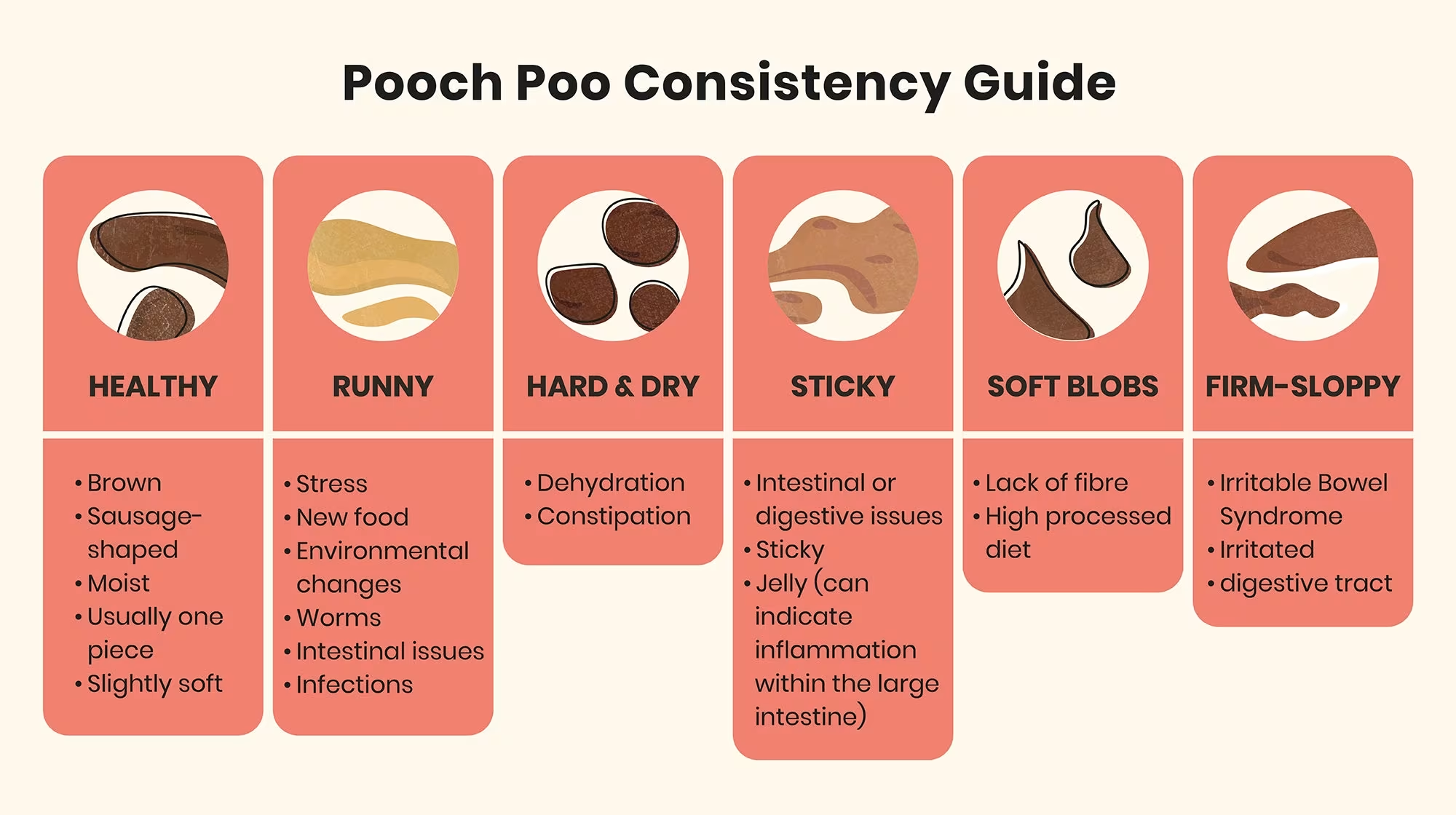
A normal dog poo should be solid in consistency so that you can pick it up cleanly off the ground without it becoming stuck or leaving a portion behind. Liquid poo is known as ‘diarrhoea’ and tells us that too much water is being lost via the digestive tract.
However, it should not be rock hard or difficult to pass either. It should be easily ‘squished’ within the poo bag after being picked up; think of bread dough before it has been baked!
While the odd irregular poo may not be a big concern, when the issue is consistent, we should take a closer look at things.
A change in consistency can have a number of causes.
Hard stool can be due to:
Dehydration or reduced fluid intake
A lack of fibre in the diet
A medical condition such as a pelvic injury or neurological disorder
Sloppy stool may occur because of:
A bacterial imbalance in the gut
A dietary sensitivity or allergy
A dog eating something they shouldn’t have (such as rich human food or bones)
A medical condition such as liver disease or a viral infection
Colour
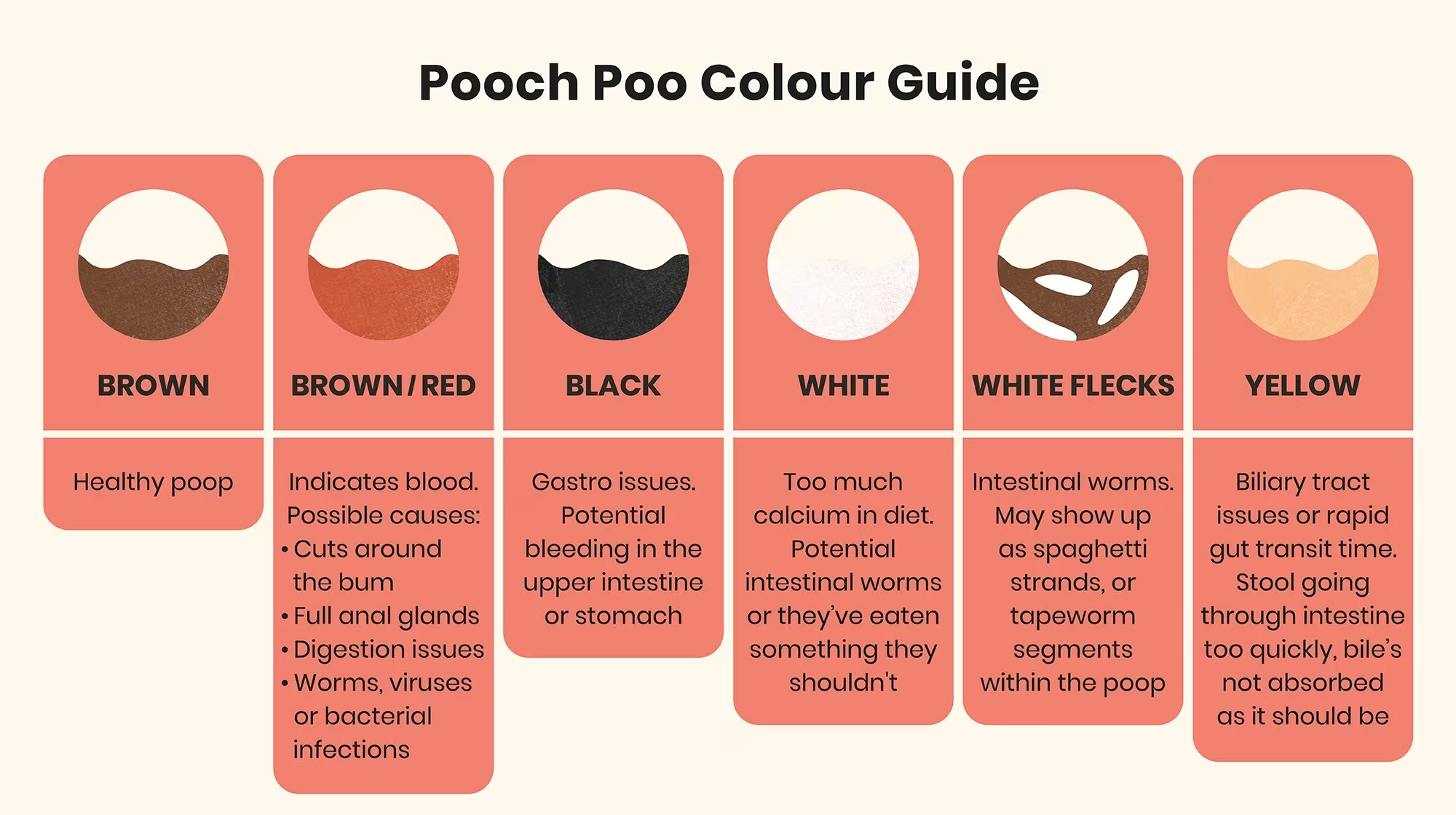
There is some degree of normal variation when it comes to poo colour and it can depend on what a dog has eaten that day. Some owners panic when they see green poos, for example, but this may simply mean that your dog has been chowing down on grass the previous day. All shades of brown are generally normal, but abnormal colours include:
White. Lack of colour is a red flag and can indicate an issue with the digestive system, such as in the liver or gallbladder. This should be looked into right away.
Red. Even a few flecks of red are not normal. We can see a small amount of blood for many reasons (including parasitic infections, anal gland abscesses and rectal polyps) but it always warrants a trip to the vet.
Black. Black, tarry poo indicates bleeding from somewhere high up in the digestive tract, such as the stomach. The blood has been ‘digested’ turning it from red to black.
Bright yellow. In some cases, this colour can mean a liver problem, though I did once diagnose a Labrador puppy pooing yellow with a ‘Crayola crayon overload!’.
Little ‘Extras’
Sometimes when we are picking up our dog’s ‘mess’, we might find something we weren’t bargaining for such as:
Mucus. Mucus can be present and may look like slime or snot on the surface of the poo. This lets us know that there is inflammation and is one of the hallmarks of ‘colitis’. Colitis is an inflammation of the large bowel that many dogs will suffer from during their lifetime.
Worms. In heavy worm burdens, we can sometimes actually see these critters wriggling about. If alive, we need to get some good quality wormer on board stat! If the worms are dead and you have just given a wormer, this lets us know that the medicine has done its job.
‘Grains of rice’. Tapeworm segments can sometimes be seen in the poo. TOP TIP: If your dog has tapeworms, check them thoroughly for fleas as fleas can carry these nasty worms.
Smell
Without a doubt, all poo smells bad! Having said this, some poo can smell particularly foul. Those fed on poor quality diets often have a worse odour as some of the food is passed undigested. As a rule of thumb, the better the food, the less awful the stench.
What is the ‘perfect’ poo for a dog?
So, what should your little one’s poo look like? Well, solid and chocolate brown with no ‘surprises’ on top is what we are looking for. Most dogs will go once or twice a day and they should not find it difficult to posture or pass the poo.
How can we improve the appearance of our dog’s poo?
Poo health is, of course, closely linked to general health as well as gut health. Feeding high quality diets and avoiding inappropriate foods (such as rich human food and bones) goes a long way.
Those prone to sloppy poos or other issues will often benefit from specific diets, such as food from our full range of dog food and treats for sensitive stomachs. Importantly, our food contains a good source of both prebiotics and probiotics, which will contribute to a healthy gut microbiome.
If your dog’s poos are abnormal, it is very important to investigate, which usually means a check over and a faecal sample. This can even be done at home with a Pooch & Mutt Gut Health Test.


Gut Health Test
Get your results in 4 weeks, with our quick and easy, at-home Gut Health Test for dogs. One simple poo sample, analysed by our microbiologists, and you’ll get personalised recommendations to help your dog thrive.
*Discount codes can't be redeemed on this item.
-
91% of customers saw improved gut health
-
Science backed gut health insights
-
Online report including key health indicators
Original price: £69.99
Current price: £34.99
In some cases, further tests such as specific blood tests and abdominal scans will be needed too. Once we know why the poo is irregular, we can then start to address the problem.
Sensitive Stomachs
-

 from
fromCurrent price: £1.99
Health & Digestion Complete Wet Dog Food -

 from
fromCurrent price: £8.49
Health & Digestion Dry Dog Food -

 from
fromCurrent price: £2.49
Fish, Potato & Pea Wet Dog Food -

 from
fromCurrent price: £3.99
Health & Digestion Postbiotic Fish Treats -

 from
fromCurrent price: £64.99
The Health & Digestion Bundle -

 from
fromCurrent price: £5.99
Health & Digestion Bone Broth For Dogs -

 from
fromCurrent price: £3.99
Dental Postbiotic Meaty Treats -

 from
fromCurrent price: £3.99
Cheddar Cheese Postbiotic Treats -

 from
fromCurrent price: £19.99
Gastrointestinal Dry Dog Food
This post was originally published in August 2022, but has been updated for comprehensiveness.


Hi Chrissie, This does sound like they could be having an intolerance reaction, especially if stools are very loose and you have had trouble in the past with certain meats/veggies. If you would like to reach out to the team on pooch@poochandmutt.com we can help look at alternatives for you. :)
Hi my dog has been on your puppy complete for about 3 weeks a d has very soft brown poop do you think he could be intolerant to an ingredient
Hi, I have changed my 11 week old cocker spaniel puppy on to pooch and mutt puppy dry food and his poo has become very soft and sticky. His poo was fine before the change so it has got to be the food. He has been on pooch and mutt for just over a week now. Should I stop the food?
Hi Linda, Sometimes when initially changing to a new food, stools can change and we do always recommend a very gradual transition. This may depend on how loose the stools are, however it could also be that your pooch is sensitive to an ingredient. Please do reach out to the team at pooch@poochandmutt.com for any further advice and recommendations :)
Hi Elaine, When changing to a new food, we recommend that you introduce the new food gradually, starting by replacing 25% of the existing food for the first 2-3 days, then 50% for a further 2-3 days, then 75% for a final 2-3 days before feeding 100% of the new food. If this has been followed and your pooches stools seem very loose, it may be that they have an intolerance to one of the ingredients. Please do reach out to the team at pooch@poochandmutt.com where they will be more than happy to help with additional advice! :)
My Staffordshire bull terrier puppy has been on your puppy food an has had loose dark stools for few month's of having him. He's had all injections an chipped have you a different food as he's getting older now?
Hi Chris, Oh I am sorry to hear this and do hope he is doing ok! This can be due to a change in food if your pup has not been on this for very long, however it could also be that your puppy is sensitive or has an allergy to one of the ingredients. Our Health & Digestion Dry Food can be a great option for those with sensitive tummies and allergies. If you would like any further advice and guidance, please do reach out to the team at pooch@poochandmutt.com :)
Having changed my rescue cocker spaniel from royal canin cocker mix to pooch and mutt calm and relaxed food, she is now pooing 3 or. 4. times a day. She is five years old and the stools are firm and normal. Is it normal for her to poo this often? Many thanks PS I did the food change very gradually so hope everything is ok.
I changed my 8 month old dachshund puppy food from Royal Canin to your puppy food. Her poo 85% of the time has a good consistency but it is very dark/ with a green shade. Ive seen lots of comments on this page about that. Im assuming this is due to some sort of ingredients on your food? She seems to like your food, but Im tempted to test other brands and see if her poo goes back to a more normal colour.
Hi Rob, Dark stools are not uncommon when the food has a higher protein and meat content, as well as more iron. This is generally not something to be concerned about, and is just related to the change in food. Of course, your pooch does have any other symptoms at all, we would always advise consulting further with your vet :)