


Knowing how to best feed your dog to ensure optimal health is not always straightforward. Owners generally find it hard to decide:
How many times a day their dog should eat
How much to feed per meal
Whether to feed wet or dry diets
Whether their dog needs a special diet or not
How often should you feed your dog?
Typically, the frequency of feeding will depend on the dog’s age. As a rule of thumb, we feed young puppies very regularly; at least four times a day. This is because they have small stomachs and are less able to regulate their blood sugars.
Once pups reach about three months of age, we should be able to increase the portion they are given and taper their feedings down to three times daily. It is at six months old that it is usually advised that dogs are offered two meals and these should be given in the morning and evening. Some owners are comfortable continuing this pattern lifelong, while others may choose to go on to feed their dogs once a day.
For an in-depth guide for feeding puppies, read our Puppy Feeding Guide.
Many small lap dogs are picky eaters as adults and will only want to eat once a day. However, a larger dog who is active may well need a couple of meals a day to keep them fuelled. This is especially true for working dogs and those who get a lot of exercise.
Listen to your dog; they will soon let you know if they are hungry!
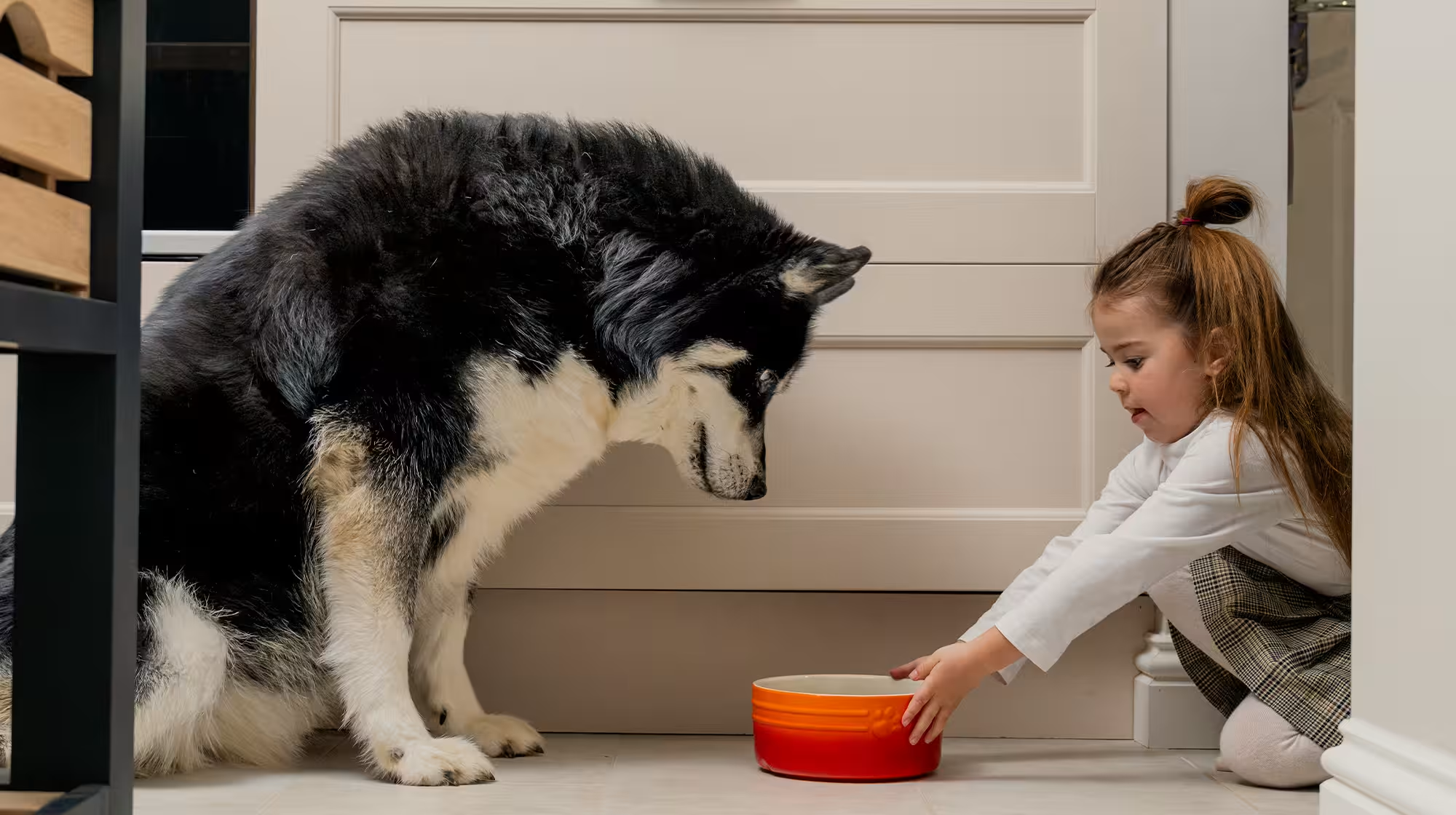
How much dog food should you put in the bowl?
Every Pooch & Mutt diet has a feeding guideline which can be found on the packaging as well as online. The guideline takes into consideration the nutrient profile and calorie content of the food, as well as the dogs weight and age.
If you find your dog is constantly leaving food behind, they are likely being overfed. More often than not, this is because they are receiving their calories elsewhere, in the form of treats and dental chews.
Remember, no more than 10% of a dog’s diet should be made up of treats so it may be time to cut down.
Of course, a guideline should not be solely relied upon as each dog as their own individual metabolism. As well as following a guideline, keep an eye on your dog to ensure they are a good Body Condition Score. You may find you need to alter the recommended amount they are fed over time in order to prevent them from becoming over or underweight.
How much should you feed overweight dogs?
Dogs who are overweight should not be fed for their current weight. So, if your dog weighs 20kg but should weigh 18kg, we should provide the amount recommended for an 18kg dog. Using a kitchen scale to weigh out food has been proven to be a lot more accurate than ‘eyeballing’ the amount or using a measuring cup.
TOP TIP: You will achieve best results by feeding a diet specifically designed to help portly pooches such as Pooch & Mutt Slim & Slender. With ingredients that promote satiety as well as fat breakdown, you are guaranteed results.


How much should you feed underweight dogs?
Again, dogs should be fed for their target rather than their current weight. While your dog may only weigh 10kg, if they should weigh closer to 12kg, this is the weight we should feed them for. For those who struggle to put on weight, feeding their meals little and often may prove easier for them to manage.
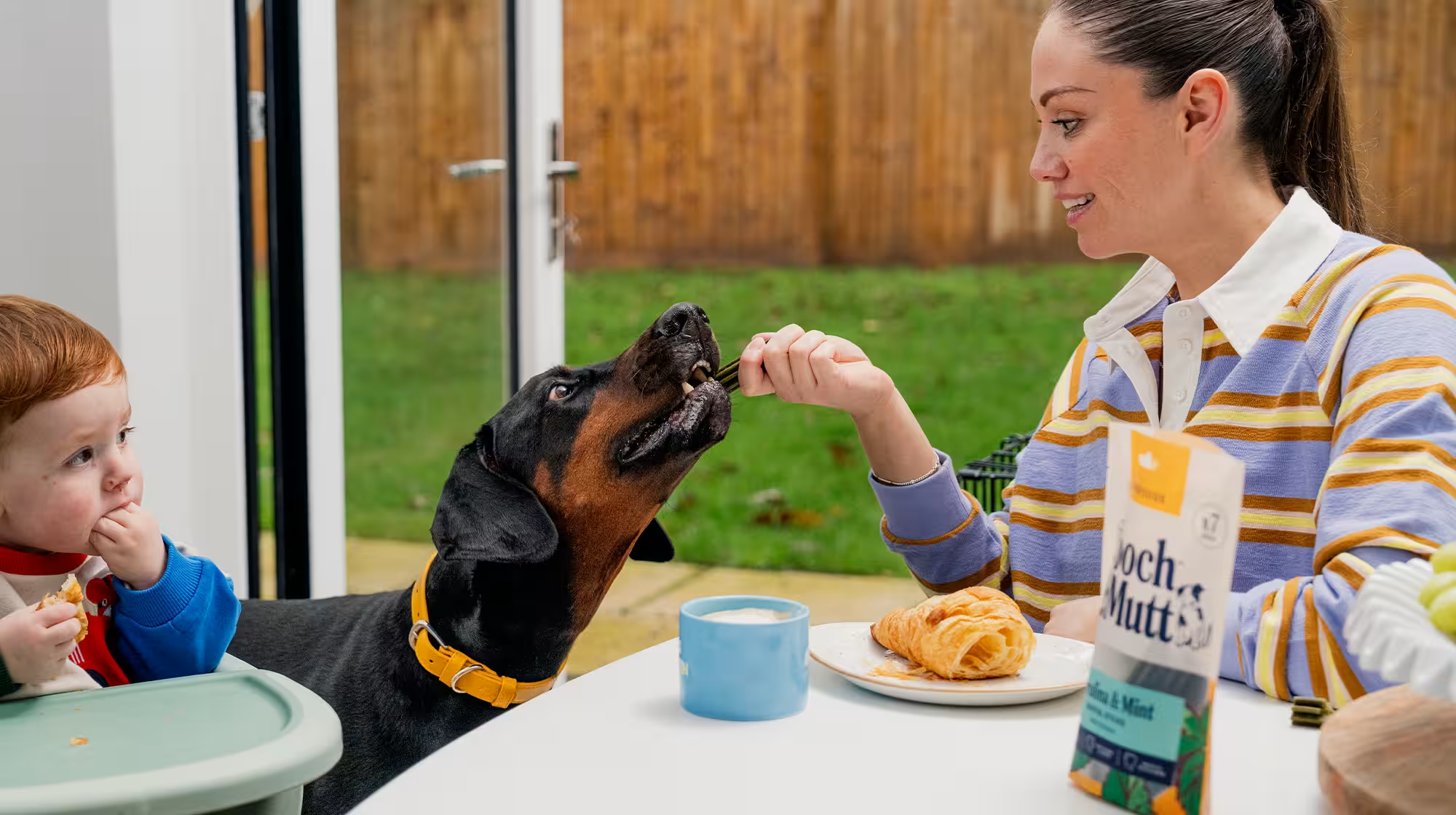
Should dogs have wet or dry food?
You may opt to offer only wet dog food, only dry food or a mixture of the two.
Wet Foods:
Are frequently preferred by dogs due to their texture and flavour profile.
Provide lots of moisture which can be beneficial for those with kidney or bladder issues.
May be easier for older animals and those with dental disease to eat.
Can cake to teeth, leading to gum inflammation and tartare build-up, especially in the absence of tooth brushing.
Can be messy, especially for those with long fur and ‘beards’ such as Griffon Bruxellois and Schnauzers.
Can have a stronger smell which some owners may dislike.
Dry Foods:
Are easy to weigh and measure out.
Can be stored for a long time and in large containers.
Are nutrient and calorie dense.
Can improve dental health and reduce tartare build-up, which is especially helpful for those prone to dental disease such as Chihuahuas and Greyhounds.
Contain little moisture so may not be appropriate for dogs with kidney or bladder disease.
Are not always as palatable as wet foods so may be declined by very fussy eaters.
However you choose to feed your dog is up to you, but it should always reflect their breed, size, age and most importantly, their needs.
To know exactly what your dog needs out of their diet to be their best selves, you should try a Pooch & Mutt Gut Health Test! With a Gut Health Test Kit at Pooch & Mutt, we send you everything you need to collect a small poop sample from your dog and send it off to our labs for analysis.
Then, we'll send you a detailed report that not only tells you the state of their gut health, but also recommends a completely tailored diet and supplement plan for your dog, backed by science.
What are prescription diets for dogs?
Animals with chronic medical conditions such as Inflammatory Bowel Disease, Chronic Kidney Disease or Diabetes will generally benefit from specific veterinary-formulated diets which are prescribed by their vet.
These diets should not be started without medical advice.
For dogs who do not require prescription diets for medical diseases, owners might wish to take a look at Pooch & Mutt’s functional dog foods. These are designed for those with minor health or behavioural issues and include calming and sensitive stomach dog food. The ingredients are specifically chosen to benefit these dogs and help combat their problem.
If you have any questions about your dog's diet or feeding them Pooch & Mutt, be sure to reach out to our team of experts.
This post was originally published in August 2022, but has been updated for comprehensiveness.


Hi, we have recently (6 weeks ago) changed our whippet puppy over to your puppy food. She is a 7 month whippet. We are currently giving her 100g three times a day but she has started to lose weight, I am just after some advice of wether we should increase the amount of food or maybe number of meals please? Thank you
Hi there, im changing my border terrier from fresh home cooked food to dried, i don't believe im giving him enough nutrients but he suffers from a sensitive tum and don't really gobble his food down, he is 2yrs 5 months and 9.4kg i tried him on the wet pooch and mutt when he was a lot younger and he never really liked it, so im really hoping that he does this ive ordered the chicken superfood. hope ive done the right thing but how much should i be giving per serving say if i feed twice a day. i will introduce it slowly over a week see how he gets on. Fingers crossed such good reviews hoping he likes it
I have a 4 month old Maltipoo puppy that is around 3.5kgs-4kgs. If I want to give him a combination of both wet and dry food, do you have a guide for doing that?
Hi guys, thank you for getting in touch! Our team will reach out to you individually to discuss your feeding guidelines :)
I have a 9 year old female corgi, currently 22kg, needs to be 17kg. I have purchased the slim and slender pack and want to combine the wet and dry food together, what is the feeding guide for this?
Hi. I’m trying to work out how much to give my 14kg cocker spaniel - it will be wet and dry food
hi, i have a 39kg golden retriever on a mixture of wet/dry food who needs to lose weight, looking for an guide on the balance between wet & dry please.
Hi, I have an 11 month old Jackapoo. He weighs 4.5 kg. I would like to feed him a mix of dry and wet food, what ratio should I give him. Thanks
Hi Everyone, thank you for getting in touch! A member of our team will be in touch directly to discuss feeding guidelines for your dogs. :)
Hi Everyone, thank you for commenting! A member of our team will reach out to you individually to discuss your tailored feeding guidelines. :) Please feel free to contact the team at pooch@poochandmutt.com